Book reviews by Debra Kay
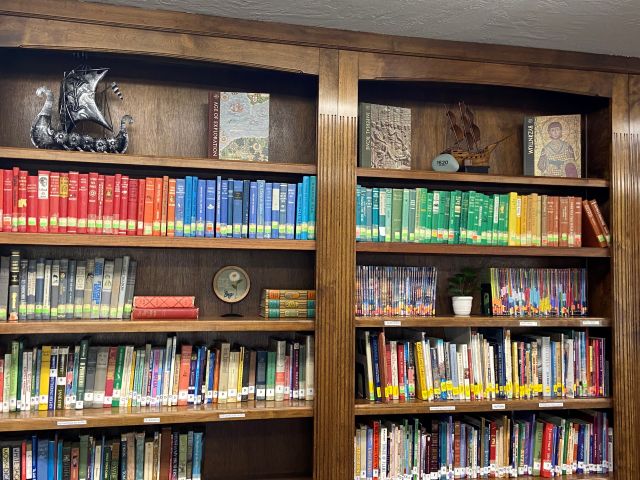
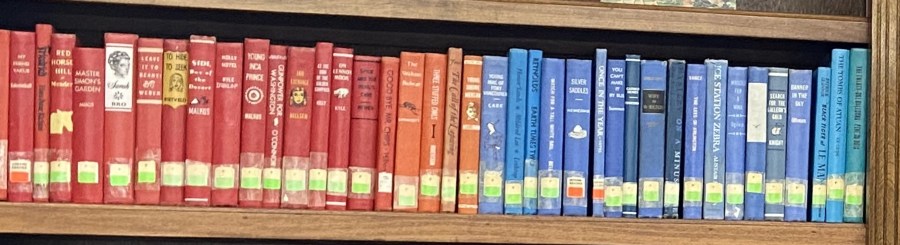
When I first took over the volunteer librarian position at Truth Tabernacle Christian School, one of my first goals was to get the books organized by genre. I left what I now refer to as the “vintage hardcovers” for last, not wanting to get rid of them but not wanting to sort through them at the time, either. I organized them by color, and I’ve left them that way, because I like the way they look.

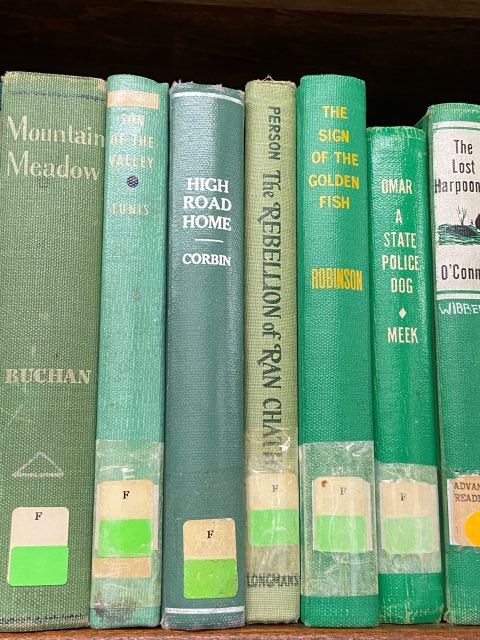
There is something about the binding and the feel of the pages in these older books that I’ve always loved. When I was growing up, my dad was the school librarian, and I remember most of the books looking just like this. Except I’m sure Daddy had them arranged according to the Dewey decimal system, not by color! But we all know I could never be that methodical.
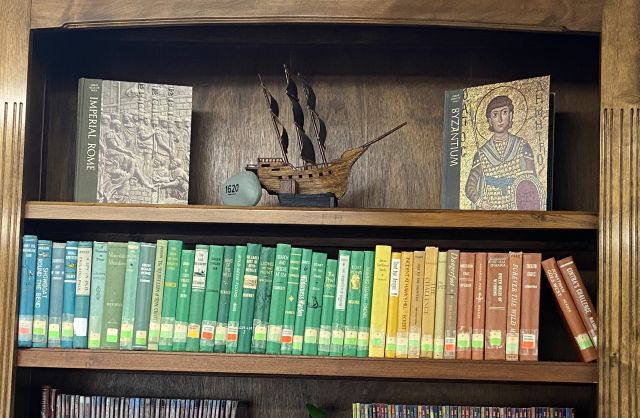
I did, however, decide to read as many of them as I could this summer, because after all, if you’re going to be a librarian, you really should know what you have on your shelves. I’ve been keeping track of the ones I’ve read and making notes about whether I liked them or not. Then I decided that “book reviews” would make good blog material. (As a side note, you will see by the title pages that a good number of our books are discards from other schools in Fresno. This is because in 1992 our library caught fire, and all the books were ruined, which resulted in numerous donations from just about everywhere.)
“Watch for a Tall White Sail”, by Margaret E. Bell, 1948


I chose “Watch for a Tall White Sail” because it looked like something I would have read sometime between the 6th and 8th grades. It turned out I didn’t recognize any part of the story, so I must not have, but it was definitely something I would have enjoyed. The story is set in 1887, when Florence and her twin brother Jaimy, along with their mother and little brother, move from their nice house in British Columbia to the edge of a remote bay in Alaska. It is there that their father has started a salmon-salting business along with Florence’s two older brothers.
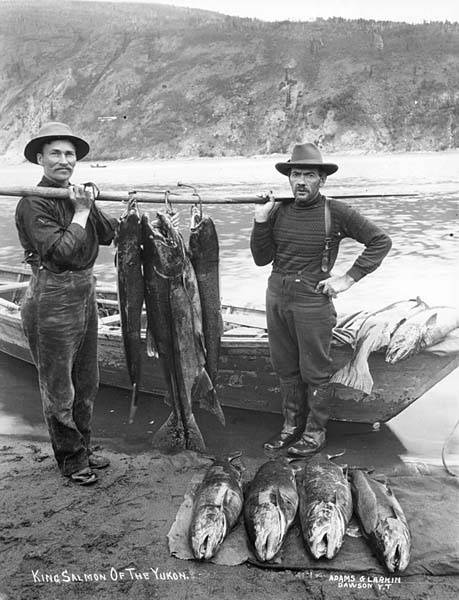
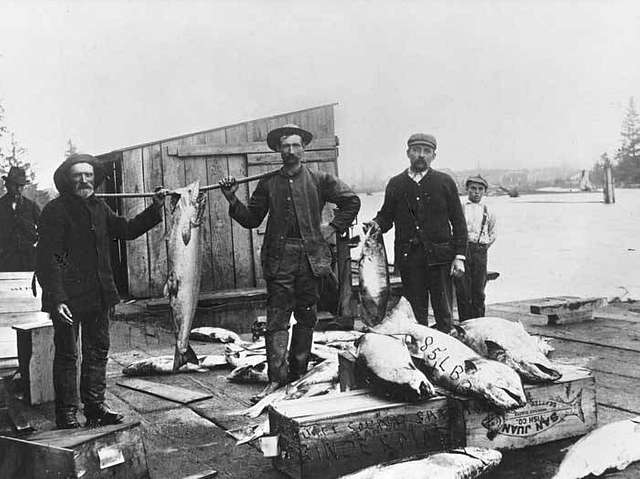
(I found these photos of salmon fishermen in Alaska, circa 1900. As far as I could tell, the photos are in the public domain.) Soon after arriving in Alaska, Florence, who has just turned 16, is left in charge of cooking, cleaning, and generally running the tiny cabin household for her brothers, something she has never had to do before. The handsome, daring captain of a schooner (hence the tall white sail) comes through occasionally, and gradually Florence begins to fall in love with him. Her little brother gets sick, and the older boys leave Florence and Jaimy take him to the town where they can get help for him. While they are gone, there is a huge snowstorm, and the twins become stranded alone in the cabin. It takes all of their fortitude and ingenuity to survive. In the end, the schooner captain saves them and asks her father for Florence’s hand in marriage. It is decided that they will marry when she turns eighteen. I feel like this is a great book for girls from middle school age and up. The reader is able to relate to Florence’s struggles, and the tiny hint of romance rounds out the story nicely.
“Good-bye, Mr. Chips”, by James Hilton, 1934
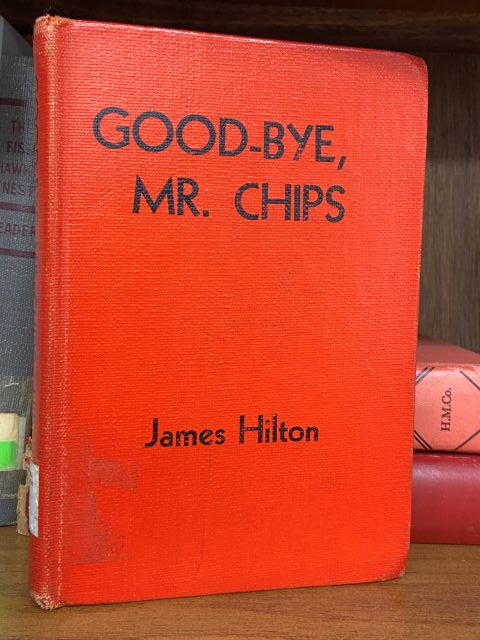
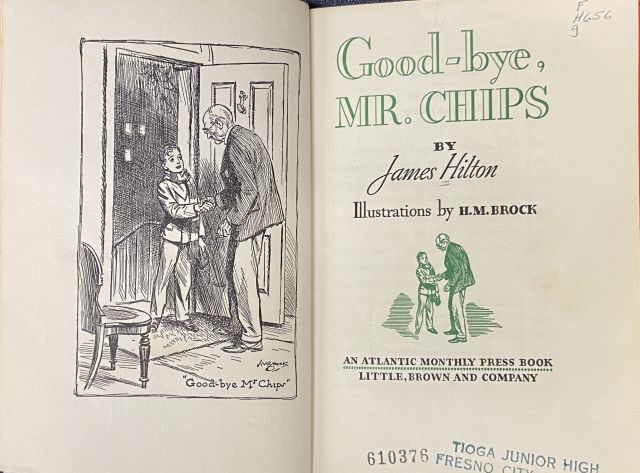
I hate to say this, because I know it’s a pretty famous book, as well as an award-winning movie from both 1939 and 1969, but “Good-bye, Mr. Chips” wasn’t one of my favorites. It’s not very long, (a novella, according to Amazon), and I’ve since seen it labelled as “psychological fiction”. I wasn’t crazy about the book, even though I’m a retired teacher like Mr. Chips was. (According to Wikipedia, where I got the photos below, the school in “Good-bye, Mr. Chips” was likely based on the Leys School in Cambridge, where James Hilton studied from 1915 to 1918.)

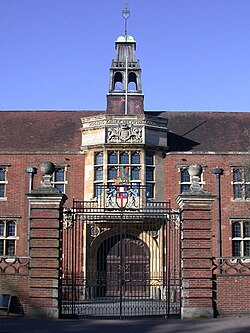
The story takes you through Mr. Chips’s reminiscences of his career as a teacher in an English boy’s school, where he taught several generations of boys from the same families. Mr. Chips gets married at one point, but his wife dies a short time later, and he never remarries. He is a bit eccentric, which I suppose all teachers are in our own way, but I couldn’t get used to the distracting way he said “umph” two or three times in every sentence. That in itself was enough to make me ready to say “Good-bye” to Mr. Chips myself by the time I finished the book. I was actually surprised to learn that James Hilton also wrote “Lost Horizon” (1933), which I read a couple of years ago and found fascinating.
“Omar, a State Police Dog”, by S. P. Meek, 1954


I’m not going to lie; I looked at the last chapter of this book first to make sure the dog didn’t die in the end (he didn’t). Omar is a German shepherd who fails the police training course, mostly because he has a mind of his own. Bob Halliday, a recruit in training himself, gets permission to keep and train Omar, as he has two years of experience training canines in the Army. Due to Bob’s knowledge of dog training, including techniques he had picked up from the military, Omar’s skills soon surpass those of the other the police dogs, and he gains the admiration and respect of Bob’s superiors. Omar helps Bob and the other officers solve a robbery-turned-murder case, with both Bob and Omar getting shot in the process, resulting in a medal for bravery for both dog and master. “Omar, a State Police Dog,” reminded me of the 1950s police shows you can hear on “Old Time Radio”. While that isn’t a bad thing, and it was a good book, I can’t say it was one of my favorites. For a police dog story, it wasn’t as exciting as you would expect (even in the “exciting” parts).
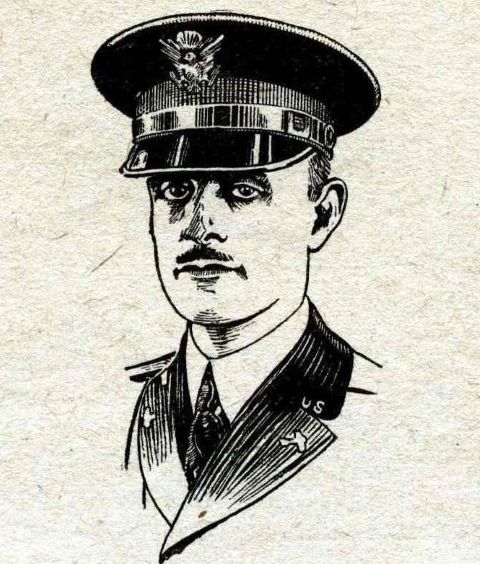
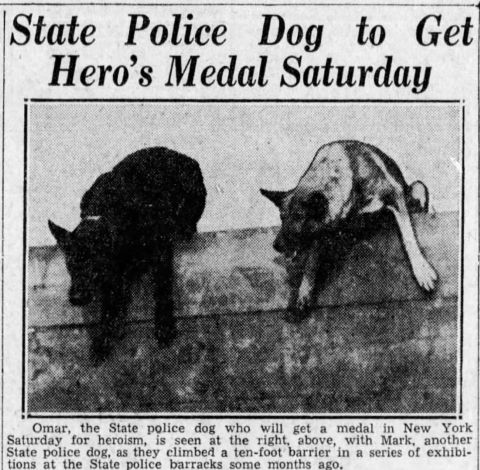
In the prologue, the author, Col. S.P. Meek, (above) explained that he spent months with the Pennsylvania state police, shadowing officers and learning as much as he could about the force prior to writing this book. He mentioned that there really was a state police dog named Omar in Pennsylvania who had received a medal for bravery in 1932, (the photo above is from Newspapers.com) but that the dog and officers in this book are purely fictional.
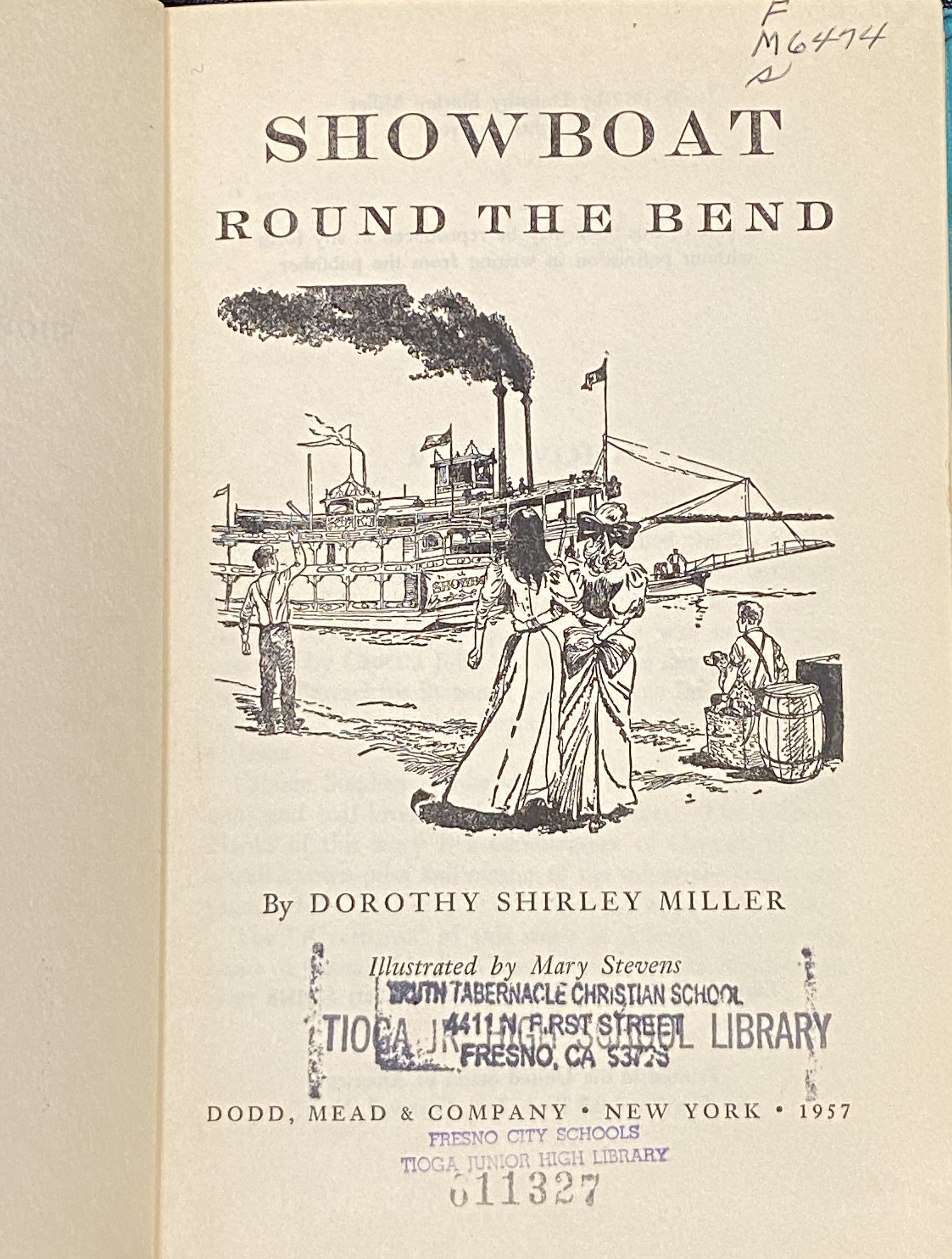

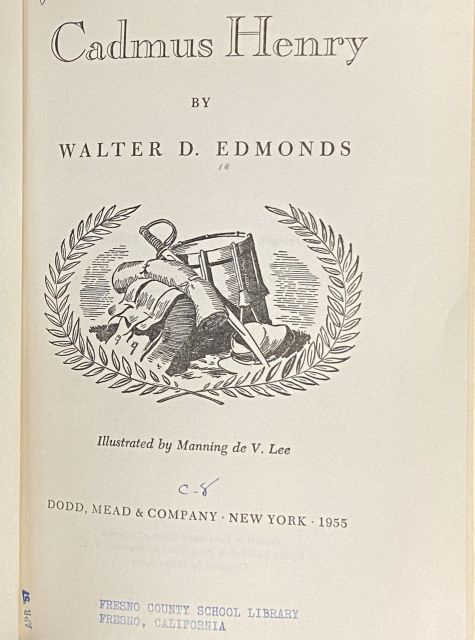
Hopefully you’ve enjoyed these “Vintage Hardcover book reviews”, and possibly a trip down memory lane to your childhood reading. Next time we’ll take a look at “Showboat Round the Bend”, “Banner in the Sky”, and “Cadmus Henry”. Until then, happy reading!
 Nana's Whimsical World
I think Omar sounds like a good read! Thank you!
You’re welcome! It even has a glossary of police radio codes from that time at the end. 😀
What a fun job! I love your arrangements by color (so inviting) and your reviews, too!
Thanks Susanne! It is super fun. 😀
Ooh, beautiful books! Great review too, Debra. I don’t know that Goodbye Mr Chips was a book, although I knew it was a film many, many years ago, and it was in black and white. Good as I seem to remember.
Thanks! With that book, if Mr Chips wasn’t always saying “umph” I would probably have liked it better. The contrast between that and “Lost Horizon” is what made me not put two and two together that it was the same author. But then, the purpose of the stories was different, so I get that.
I often wonder what is going to happen to all the old books as everything goes digital. Much more interesting to pull a real book off the shelf and hold and smell it, then look at a digital copy.
That’s very true. Reading these books has been a little peek into my teen and pre-teen years in my dad’s library.
Your dad was an amazing Librarian!
He made the library inviting, interesting and a place you didn’t want to leave.
a former student💚💛
Thanks! 😀
Thank you for posting these. It is so easy to forget these beautiful books that can instil a lifetime love of reading. The frontispiece to the Margaret E Bell book is particularly striking. It made me look up Louis Darling: what a talented and interesting man he was.
Oh wow! I looked up Margaret E Bell but it never occurred to me to look up Louis Darling. I’ll have to do that! Thanks for reading and commenting. 😀