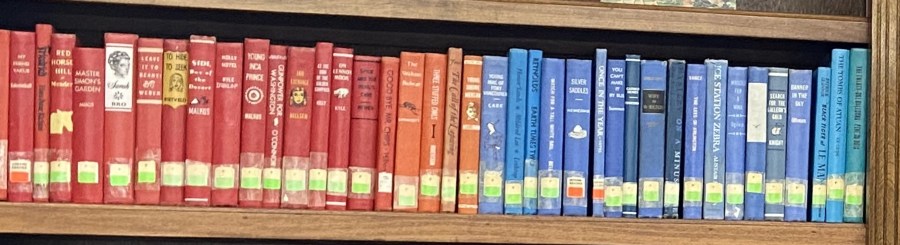
Book reviews by Debra Kay
“Banner in the Sky”, by James Ramsey Ullman, 1954

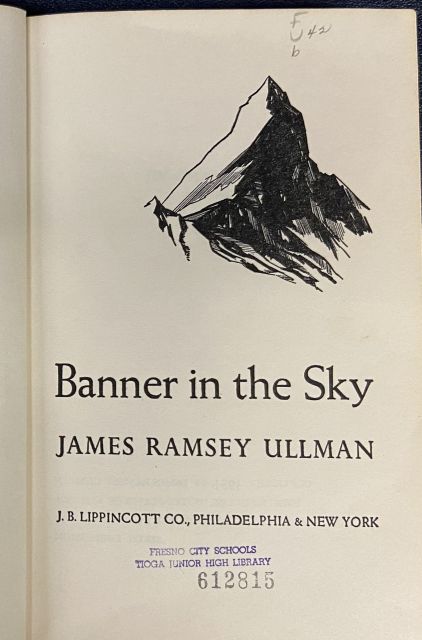
I almost didn’t read this, and if I hadn’t, I would have missed one of the best of all the “vintage hardcover” books I’ve read this summer. It got off to what you might call a slow start, but I gave it a second chance, and after a few chapters, I could barely put it down. According to the prologue, “Banner in the Sky” was inspired by the first successful ascent of the Matterhorn by Edward Whymper (pictured below) in 1865. The English climber in the story, Captain John Winter, is named loosely after Whymper. The main character is a 16-year-old boy named Rudi Matt, whose last name Ullman wrote that he took from the word “Matterhorn”. The village Rudi lives in (Kurtal), and the mountain they climb (the Citadel) are, however, entirely fictional.


Rudi Matt lives in Kurtal at the foot of the Citadel in 1865. When he was just a baby, his father, Josef Matt, died in an attempt to reach the summit of the ominous peak. Since then, no one else had dared make the climb, and it became widely accepted that the mountain was unconquerable. Rudi’s father, a highly respected climber and alpine guide, had gone higher than anyone else ever had, and no one is interested in breaking his record. Rudi works as a dishwasher in a hotel, because his mother and uncle are determined that he will not be a mountain climber like his father. They have planned his future in the hotel business, but Rudi wants to climb the Citadel more than anything. His dream is to post his father’s red shirt like a flag on the summit.

Rudi regularly sneaks away from work to explore the lower slopes of the Citadel, much to the chagrin of his mother and uncle Franz, a respected and skilled alpine guide. Teo, Rudi’s supervisor at the hotel kitchen, is an older man who had survived the fateful attempt on the Citadel and is permanently disabled by the injuries he sustained in the incident that killed Rudi’s father. Teo believes Rudi has what it takes to be a climber and later encourages him. In one of his secret escapes to the mountain, Rudi comes across a man stuck in a crevasse and manages to pull him to safety. The man turns out to be the world-famous Captain John Winter, an English climber who believes the Citadel’s summit can be reached. Winter is impressed with the boy, and later he invites Rudi to accompany him in his attempt on the Citadel. Rudi tells Winter he has his mother’s and uncle’s permission to go, but in reality, they know nothing about it.
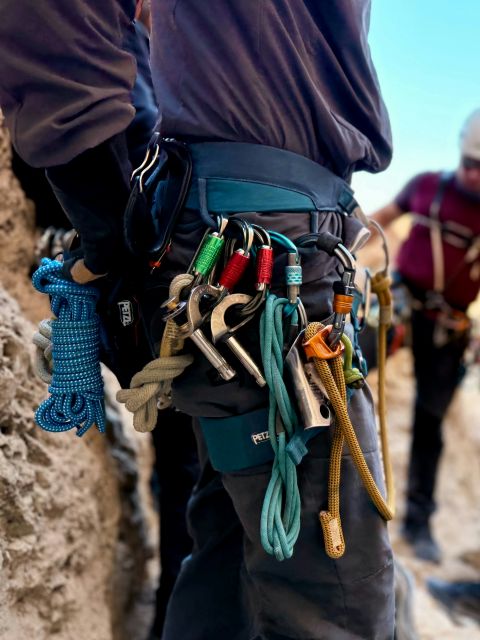

(Rudi and his climbing companions didn’t have modern equipment to traverse rocks and crevasses like what you see in these photos from Unsplash.com. Mostly they used ropes and their bare hands.) Unable to find a guide from Kurtal, Winter hires Emil Saxo, a skilled but arrogant guide from a neighboring town. Meanwhile, Rudi’s uncle Franz, realizing the boy has run away to join the expedition, overcomes his dread of the Citadel and decides he must join the climbers. The last part of the book is where it turns into a major nail-biter (or perhaps a more accurate term would be “cliff-hanger”). There is fierce competition between Franz and Emil, and Winter, having been injured prior to Franz’s arrival, becomes ill, and almost doesn’t make it to the top. Due to an unforeseen and almost deadly event near the summit, Rudi is forced to abandon the climb and thus misses out on reaching the top, but his sacrifice saves Saxo’s life. Winter has somewhat recovered, and he and Franz take the red shirt to the summit. When they get back to the village, Winter lets everyone assume that Rudi had reached the summit with them. His mother and uncle realize that, like his father, Rudi is a born mountaineer. It is implied that Rudi will grow up to be a master climber and guide.
“Cadmus Henry”, by Walter D. Edmonds, first published in 1949
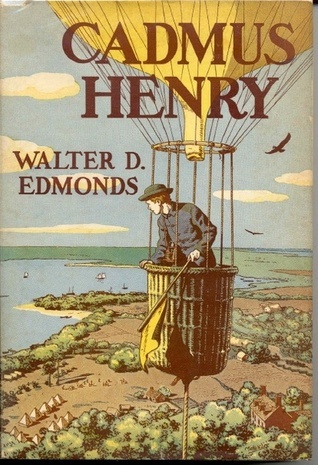
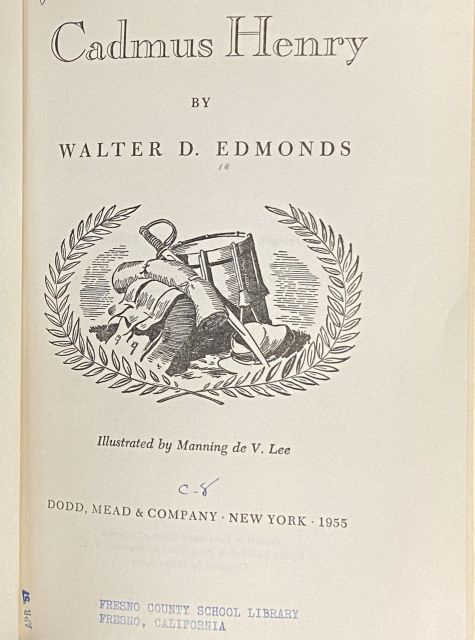
“Cadmus Henry” is not a long book, but as historical fiction, it gives a lot of information about the aerial balloons used during the American Civil War. Cadmus is a young man who wants to join the Confederate army, but due to his fine penmanship, he gets a civilian job copying out military letters and reports during the Pennsylvania Campaign. Being stuck in an office all day was not what he had envisioned the war to be, so when he sees an opportunity to be a reconnaissance scout, he takes it. Unbeknownst to him, this involves being sent up in the small basket of a surveillance balloon to gather information on the Union troops. Even though the balloon is tethered to the ground, Cadmus is shocked to learn that this will be his new job. I learned from various articles online, including this one from the National Parks Service, that both sides had aeronautic units, but those of the Union army were larger and more advanced. Cadmus Henry’s balloon, on the other hand, is old and patched, and he doubts its safety, but has no choice but to obey orders. During the course of his reconnaissance missions, we learn how the balloons worked, meet the “ground crew”, and watch Cadmus’s conception of war change as he sees the similarities between the opposing armies from a bird’s-eye view. Due to an unfortunate incident on the ground one day, the rope that has been the balloon’s tether is cut, and Cadmus finds himself drifting helplessly over enemy territory. He drifts over the river in the middle of the night and is ultimately rescued by a young woman who is rowing a boat to the other side. She offers to take him further down the river but insists that he go with her to her destination first. It turns out she is delivering supplies to Harriet Tubman for use by the small group she is leading to safety through the Underground Railroad. Tubman grills him on what he’s doing there and whether he is in the Army, and when he explains that he’s a civilian and promises not to tell anyone what he’s seen, the group begins to trust him. I found some of his adventures a little far-fetched, but by the end I was happy to see that there could possibly be a romance between Cadmus and the abolitionist girl in his future. But we’ll never know, because the author ends the book with just a hint, saying that would have to be another story in itself. And there’s no sequel.
Up Next:
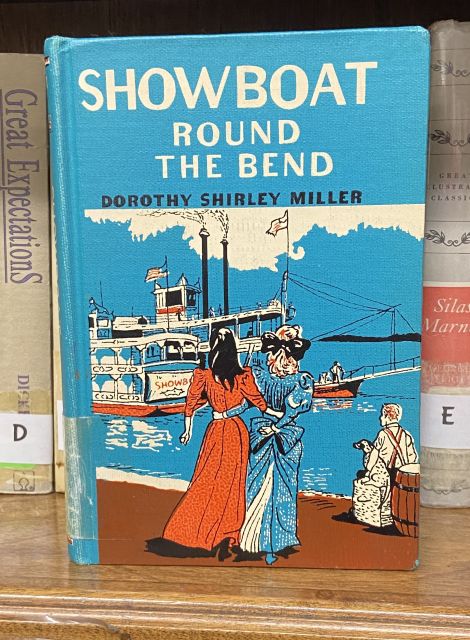
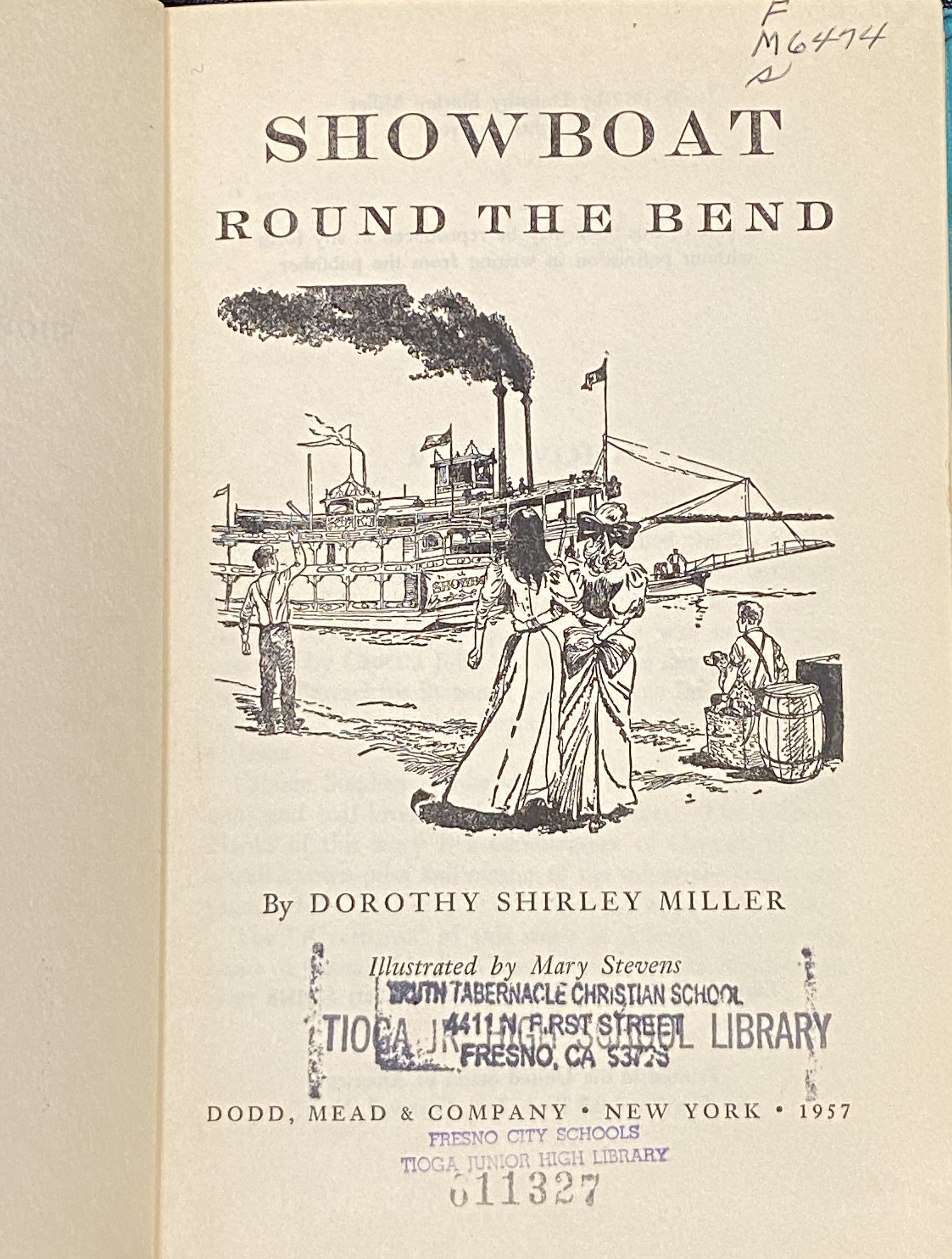
Note: Although in “Part 1” I promised to include it here, the post was getting too long, so I’ll save “Showboat Round the Bend” for next time. The photos not taken by me in this post are from Unsplash.com, Google Books, and various online searches.
 Nana's Whimsical World
Really interesting… and more lovely old and great books!
It has been a fun summer project. 😀
😊
One thing I like about the older books is the illustrations.
Yes, definitely!