
A Look at Early Studio Photography
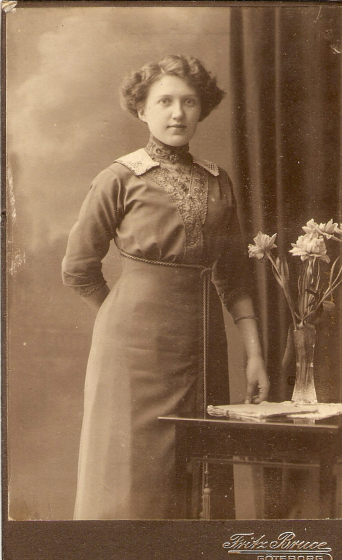
You could say my mind is like a computer that always has programs running in the background. One of those, lately, has been the idea of a blog post about props and backgrounds used in early studio photography. As a result, I’ve started paying closer attention to the backgrounds in photos I’ve found online as well as those in my own family. Here, I’ll show you some of what I ‘ve found.
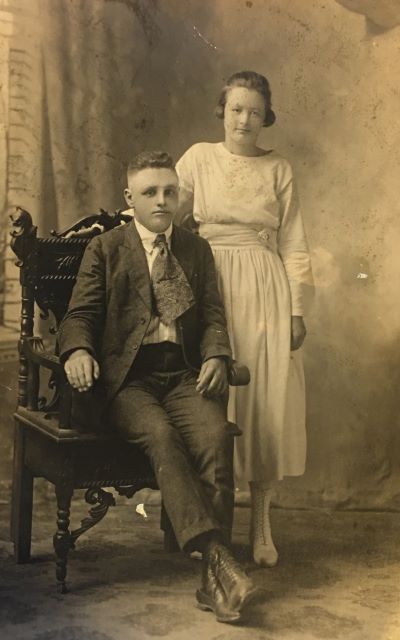
This is an unknown couple from the Anderson/Peterson side of my family. I think the man’s tie is kind of, well, interesting, and I love the lady’s white lace-up boots. It is possible that it’s a wedding photo, given the white dress. The heavy, ornate wooden chair was typical of studio portraits in those days.
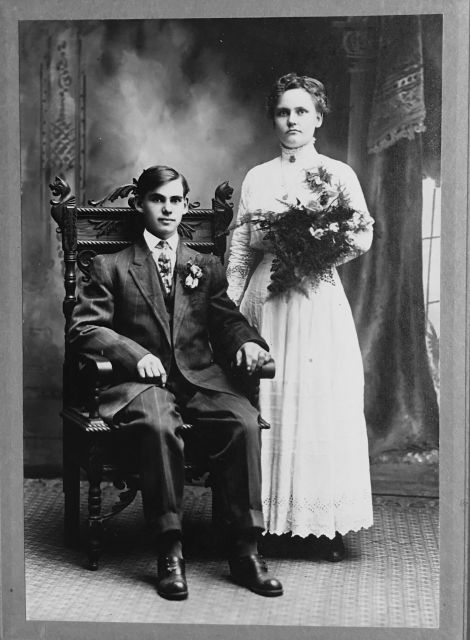
In this wedding photo of my great aunt Jennie and uncle Walter, you can see that Walter is seated in a similar chair. It turns out these were called “posing chairs”, and there were actually catalogs where photographers could buy them, as well as elaborately painted backdrops.
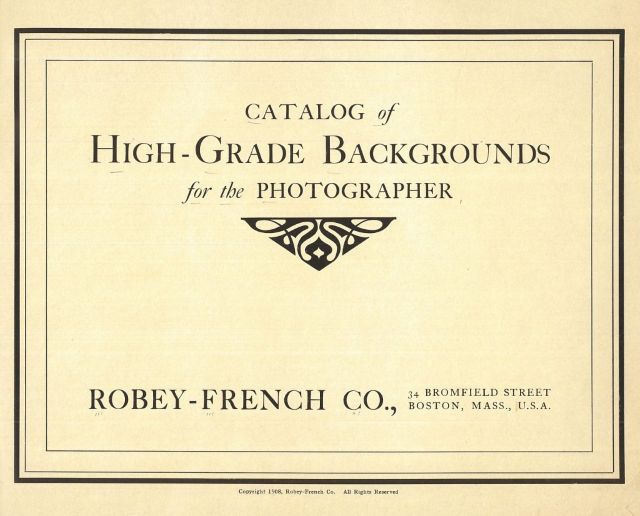
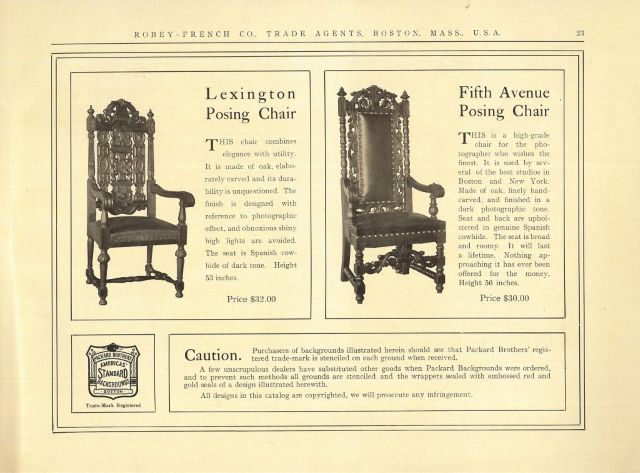
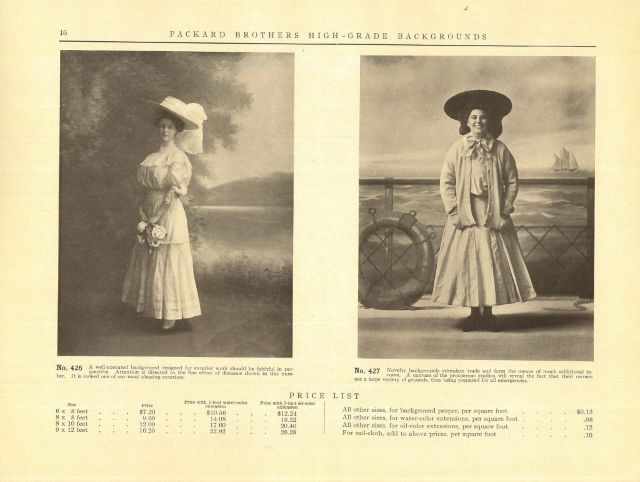
I found the above images when I searched online for “props and backgrounds for early photography”. You can see the whole article here. It had never really occurred to me to wonder where the photographers would have gotten their chairs and backgrounds, but it makes total sense that there would be companies dedicated to just that.
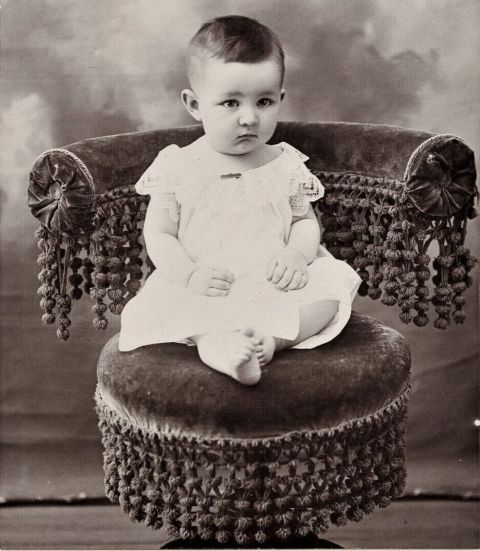
When I searched “posing chairs in early Victorian photography”, I found this fascinating article on a site called “Old House Dreams”, highlighting many types of early posing chairs. One of the most amazing things I learned from this was that those fancy chairs were manufactured especially for photography studios and therefore would not be found in the average home, or home furniture catalog. Chairs like the one pictured above were also adjustable, so you could remove the arms, make the back higher, and basically change the look of the chair to fit the effect you wanted in your photo.
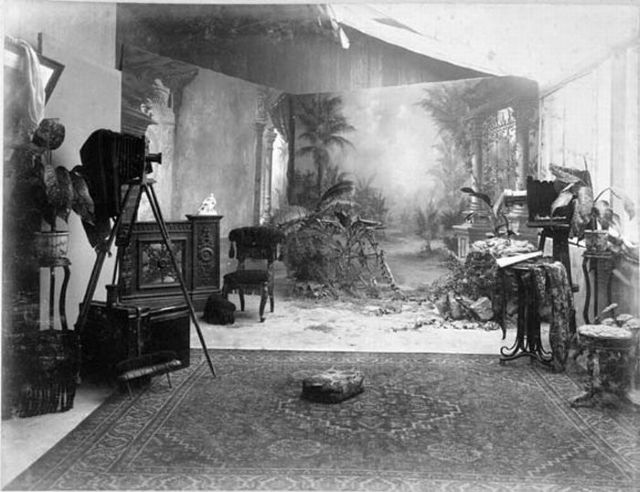
Unbeknownst to me, these photo studios could get quite competitive. According to Photograph Display: Photographer’s Painted Backdrops and Props – Buncombe County Special Collections, “Photographers were given awards at exhibitions for backdrops, props and accessories. They had become so popular that they became a part of every photographer’s studio, whether purchased, painted by a professional artist, or painted by the photographer him or herself.” Click on the link to see their photos and more information.
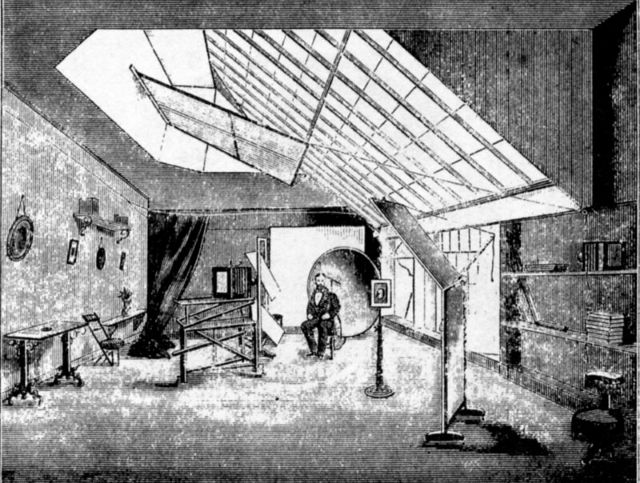
One thing I had never thought of was what they did for lighting in the absence of flash photography. I found this on Wikipedia, where it said the image was scanned from a book and in the public domain. Photo studios were often fitted with huge skylights, commonly on the top floor of a multi-story building. It would follow, then, that weather would have affected the light for your photo. On a dark, rainy day, you might not get the best conditions for your portrait.
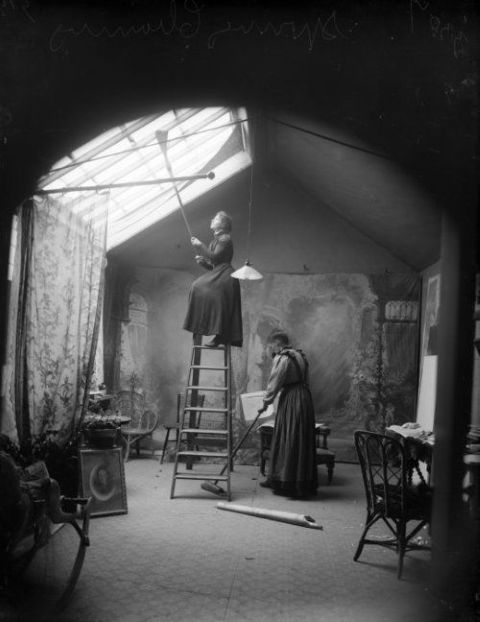
This was on Pinterest, and I like it because, well, who would have thought somebody would have to clean those skylights? I might mention here that it’s sometimes hard to find the proper credits for photos you see on Pinterest. Some are not connected to any other website, and some that do have a site you can click on will lead you to “page cannot be found” or some other reason why you can’t see the information. If you don’t see a link to an article or a reference other than “Pinterest” on my blog, that’s why. (As for the lady on the ladder, you can do a lot more in a modest dress than most people think.)
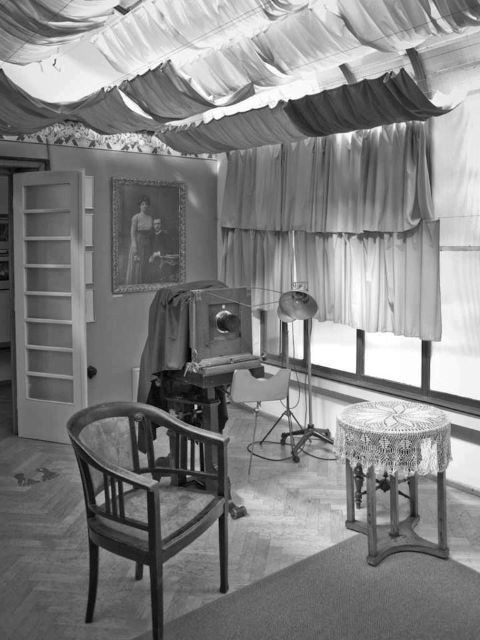
Another Pinterest photo. Notice the curtains over the skylights, as well as on the window. The window-type door in the background could be used for all kinds of different effects.
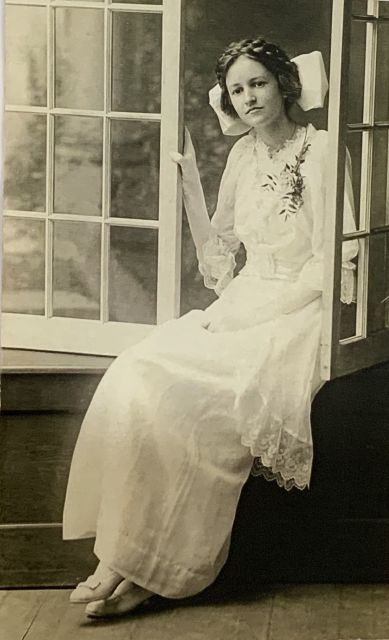
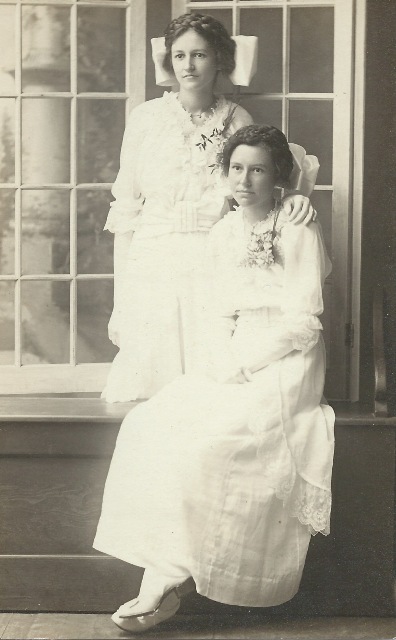
I’ve always loved the window seat effect in these two confirmation photos of my grandma Edla. I don’t know who the other girl is in the photo on the right. I’ve seen quite a few examples of a background prop with a place for the subject to sit in front of it, adding a creative effect.
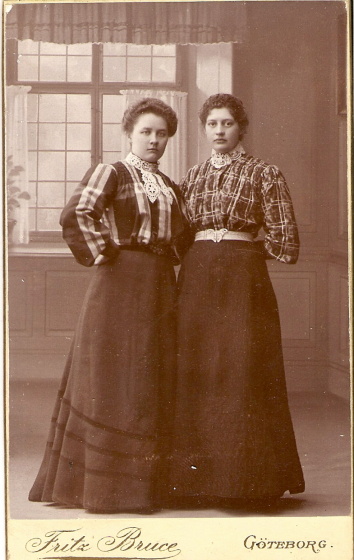
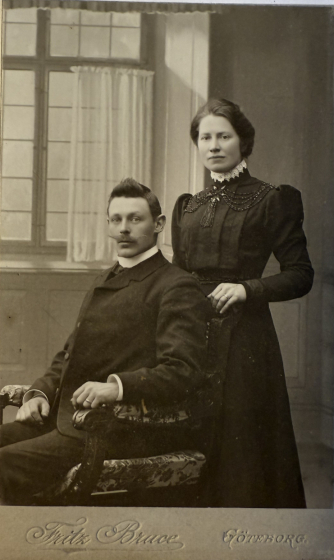
Windows in general were a popular background choice. In these two from Swedish Roots, both by Fritz Bruce in Goteborg, we can see how the same “window” was used to achieve different looks.
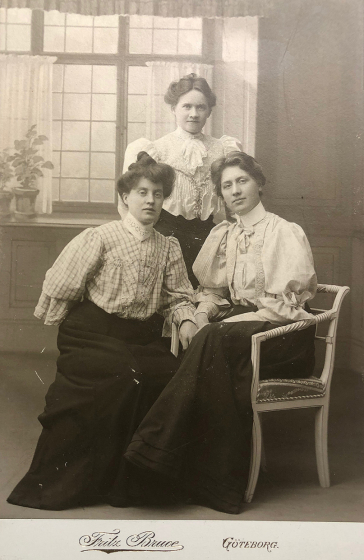
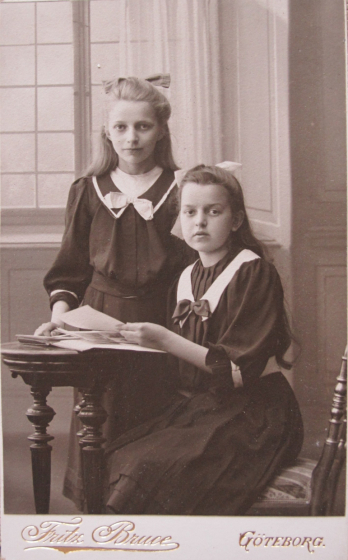
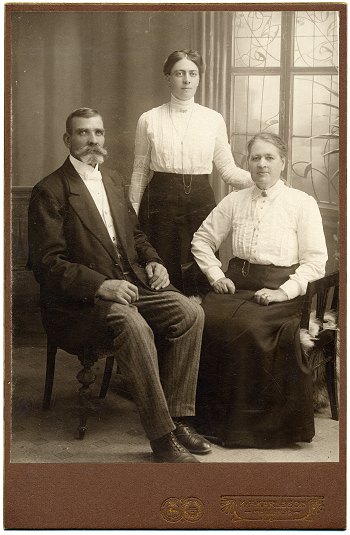
Two more Fritz Bruce photos with the same window and different chairs, and a similar window from another studio.
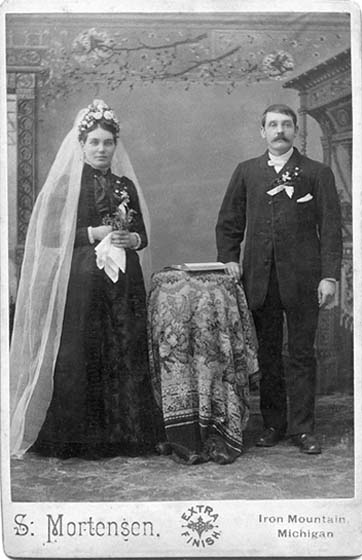
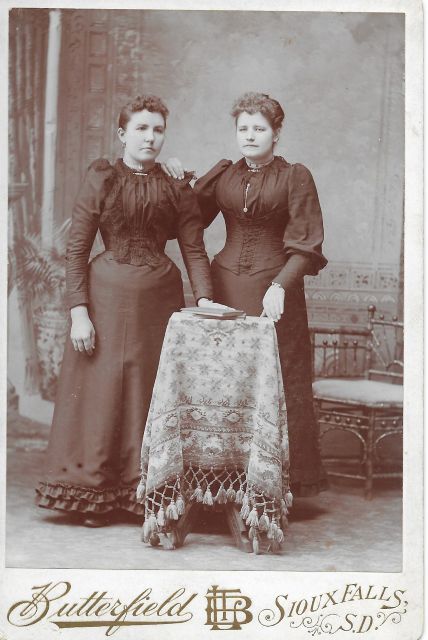
Even though by the 1890’s, exposure time was short enough that people didn’t have to pose, unmoving, for twenty minutes, they did have to stay still long enough to make it uncomfortable. Leaning on or otherwise touching tables, podiums, fences, and other props helped prevent any little movement could cause the photo to be blurry. These two cartes de visite from the U.S. both feature a table. I can see how having different table covers to choose from would have been an inexpensive way for photographers to offer variety to their customers. The wedding photo came from Swedish Roots, and the bride is identified as Hilma Augustusdotter. No mention of the groom’s name. In the second picture, the lady on the right is my great grandmother Charlotte Nelson (Edla’s mom), but I don’t know who the other lady is.
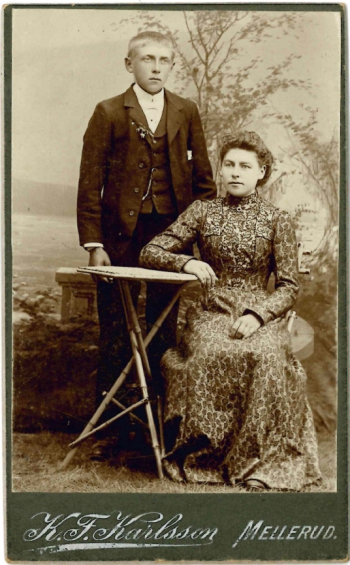
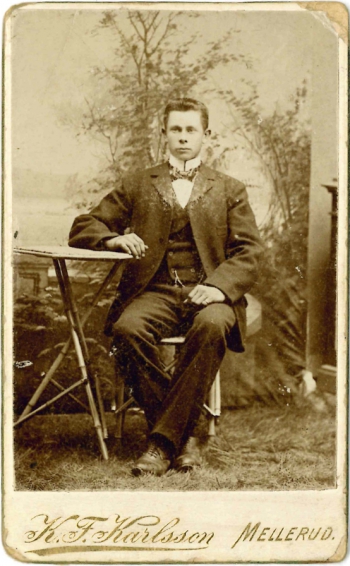
At many studios, like K. F. Karlsson’s, you could opt for a rustic motif. I think the portrait of the young man by himself should have been cropped more closely, because it looks like you can see part of another background prop (chair? table? pedestal?) at the far right.
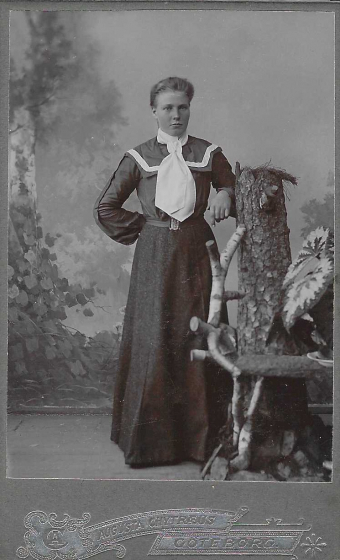
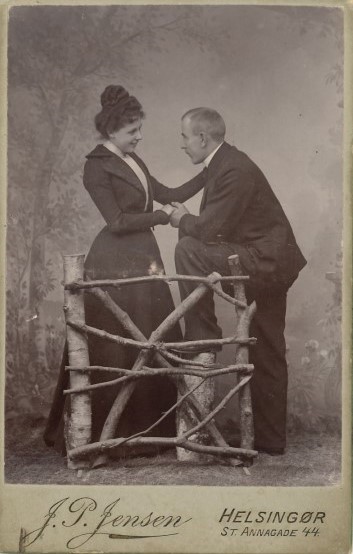
I don’t know what it was about the fences that looked like they were made of sticks and logs, or the tree trunk effect, but they wouldn’t have been my first choice. As a point of interest, Swedish Roots had the one on the right labeled as “Uncle Peter and Danish wife”.
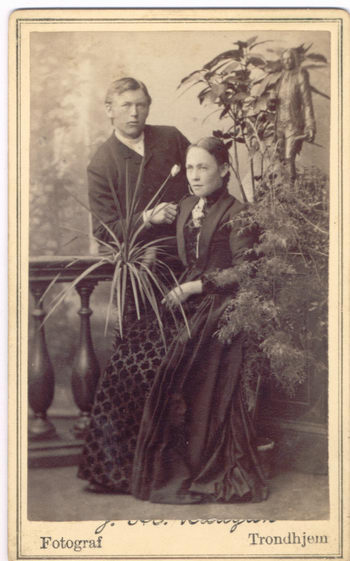
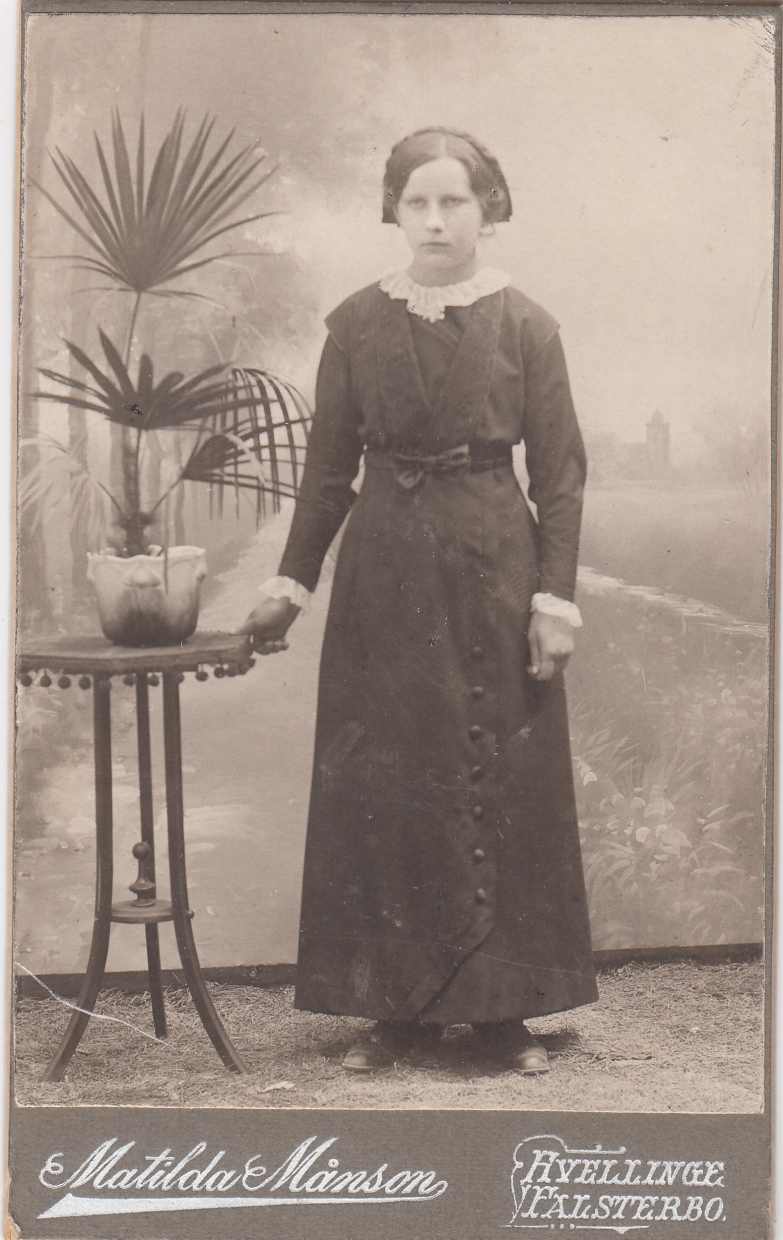
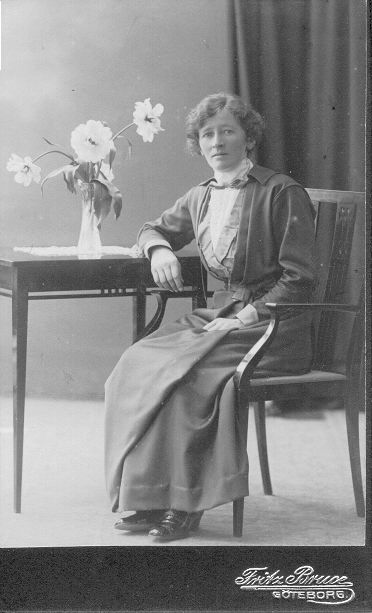
Besides branches and logs, large plants such as palms were popular additions to a studio portrait. The center photo was labelled “Karin Jonsson” on Swedish Roots. There were no names for the other people.
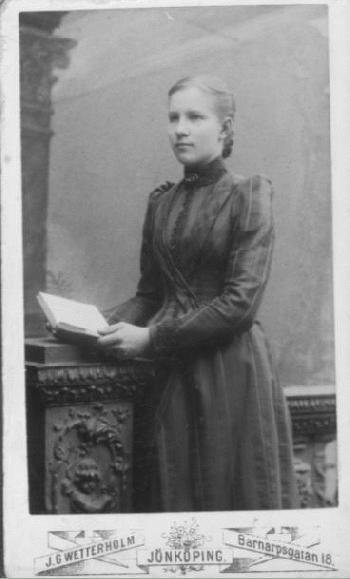
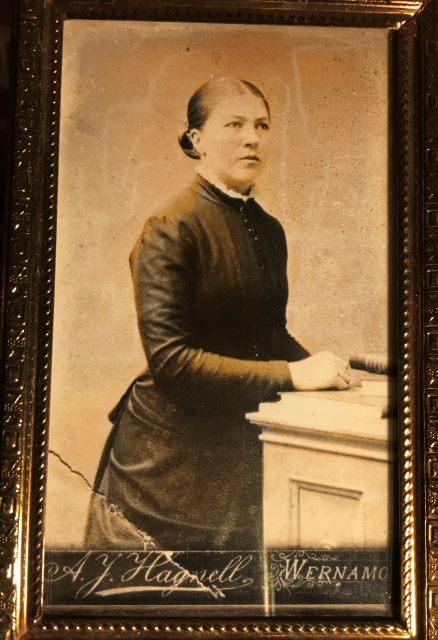
You’ve seen the A.J. Hagnell photo (right) of my great grandmother, Petronella, before. To the left is another lady, similarly dressed, from nearby Jonkoping, standing by a fancier podium or pedestal.
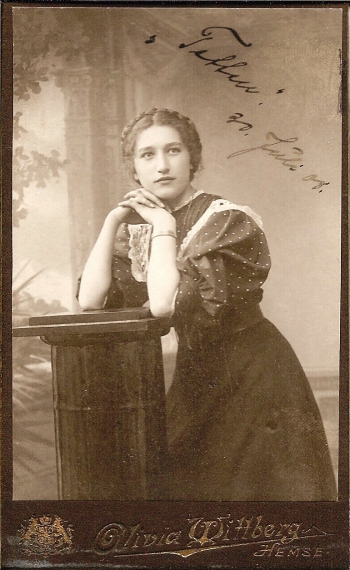
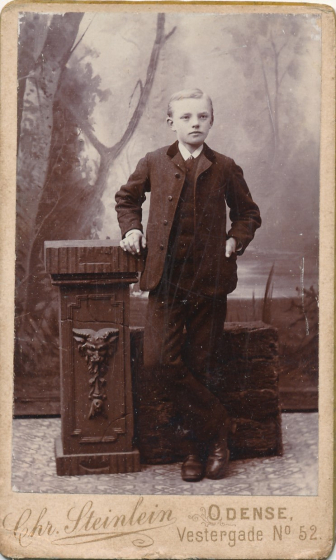
I love the photo on the left, although it looks like the pedestal is tipping a bit. That makes me think that while it looks like it’s made of heavy wood or stone, it probably wasn’t. Somehow being photographed next to an ornate prop, along with his posture, gives the boy on the right a serious, “grown up” appearance.

One of these days I need to photoshop the damage out of this one. It’s my great grandfather, Nels Nelson, taken in Sioux Falls, South Dakota. I’m not sure of the year, but he died in 1900, shortly after he turned 41. Notice how he’s leaning on a posing chair that’s draped with some type of rich looking fabric, while resting his heel on the step at the bottom of the pedestal beside him.
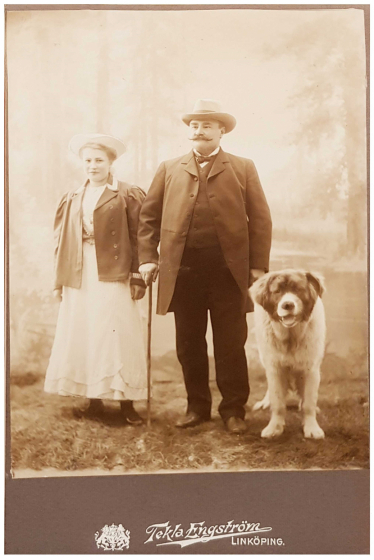
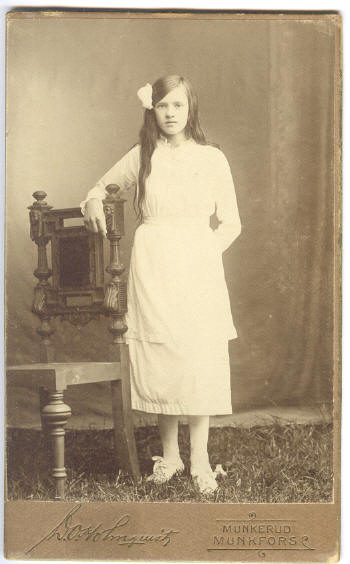
Then there was the outdoor look. Who knew there was artificial grass that long ago? Or was it real?
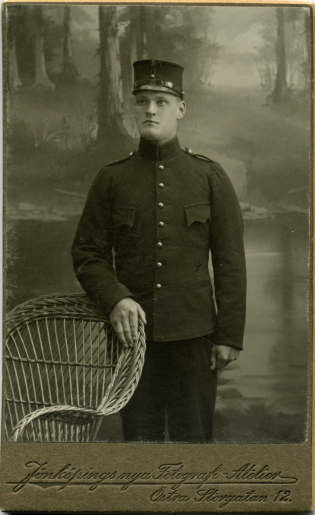
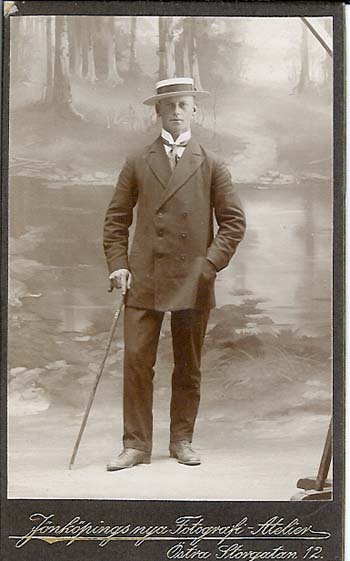
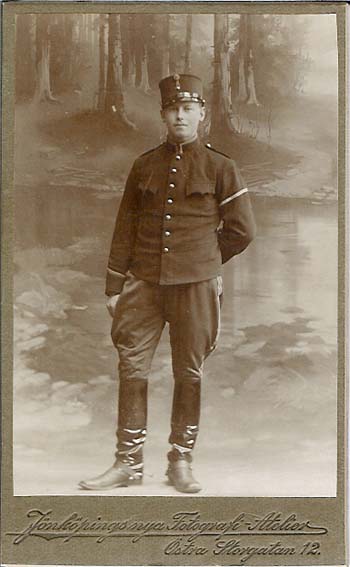
These three photos, all from the same studio, show different treatments of what appears to be the same forest background. The one in the center looks like part of something else got into the bottom corner by mistake.
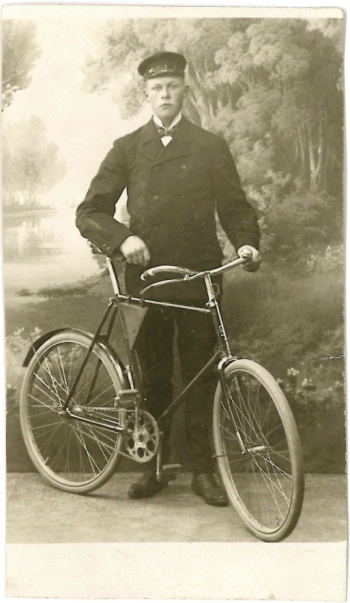
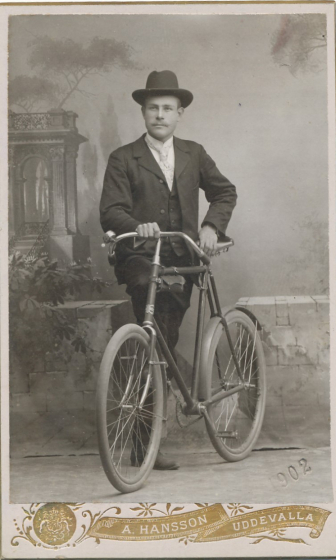
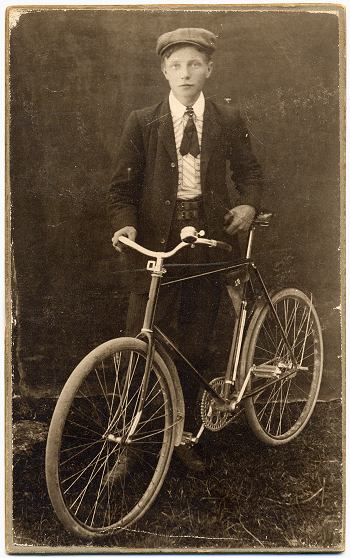
You could also have a variety of outdoor props for your photo. I don’t know if these people brought their own bikes or if they were studio props.
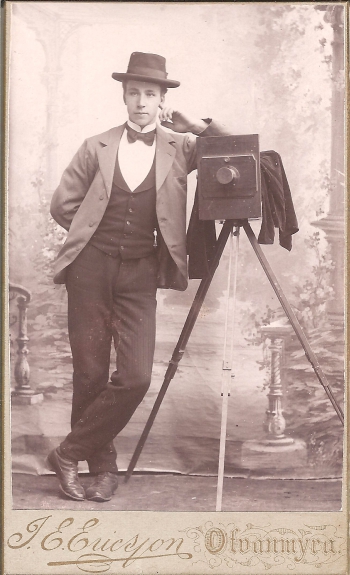
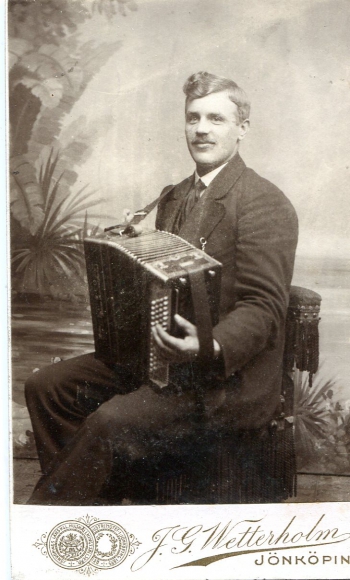
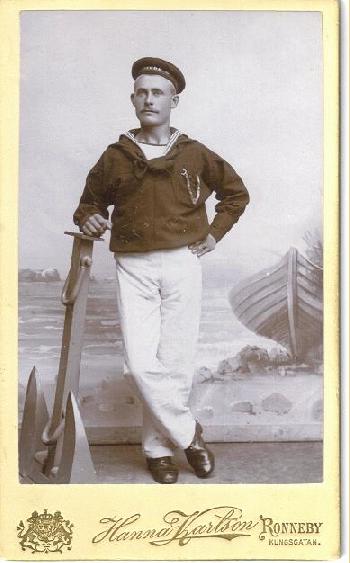
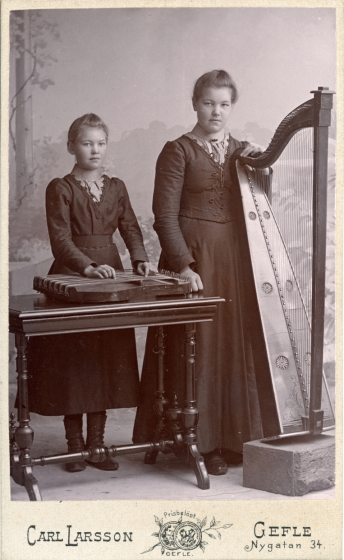
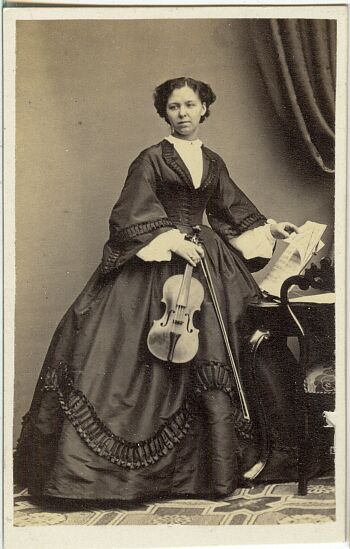
People posed with props pertaining to their professions, or with musical instruments.
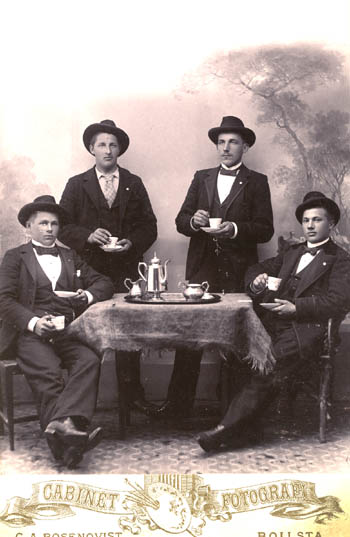
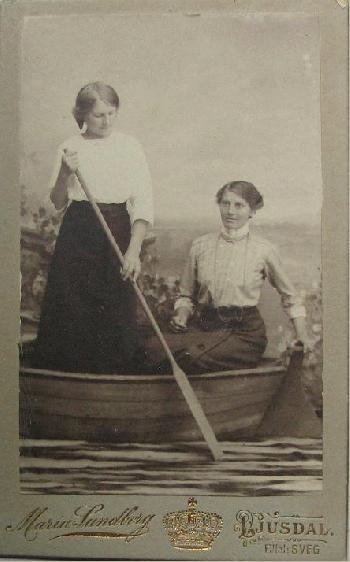
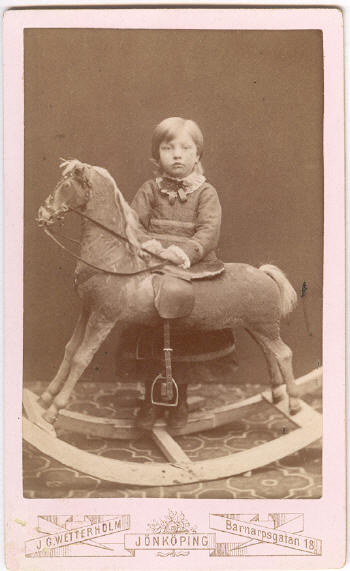
While most early studio portraits did tend to be pretty much the same, with the right props and backgrounds, there was also a great opportunity for imagination. I’m guessing it depended partly on the clients, and partly on the photographer and what he or she had available to work with. I guess you know this post could go on forever. The Swedish Roots website alone has 292,200 images in their “Old Portraits Database”, with more being added every few weeks. I myself have uploaded 28 cartes de visite and cabinet card photos from my family, just so you know I’m doing my part to add to the collection.


And in case you’re wondering if I have enough material to do any more early photography themed posts…


Oh wow, amazing! That was really interesting. I particularly like that boat thing, very clever! 😊
Glad you enjoyed it! I thought the boat was clever, too! Probably one of the most unusual ones I found, too.
Wow! So enjoyed reading this post. So much amazing content!
Thanks! Glad you liked it!
I think most of the backgrounds add to the interest of the photos.
Yes, I agree! 😀
This was truly fascinating, Debra! Imagine competing with backdrops and luxurious chairs! I didn’t know the chairs could be altered to suit different occasions or persons. So funny also with the mistakes where other props are showing – perhaps beginners’ mistakes by the photographers? I wonder about the grass, it looks less tidy than a fake grass mat. I guess they could have put up a backdrop outside as well, if the weather allowed?
Thanks! I’m glad you liked it. That does make sense about the backgrounds outside, I also thought some studios might have had a little yard or outdoor patio for that purpose too. One thing I want to look into more is how itinerant photographers would go around and take pictures of people in front of their houses, etc. I haven’t found a lot of info on that but I know it was done a fair amount in the old American west. 🤔
That would be interesting to know more about! I would not be surprised if photographers visited people at home to offer a photo op, I imagine that could have been quite interesting for ordinary people, who might not take the time to travel into town.
Oona: “Photography seems like it was a very formal affair once. Oona could not possibly sit still for such a picture. She has got places to go and people to see and ninja battles to fight!”Charlee: “Lately our Dada has been cleaning up old pictures for his Dada but they are not this old, they’re from the 1930s through the 1950s maybe. Some of them are formal portraits though and you can definitely see the props in them.”
Foster: That’s cool! We have some photos from the 30s and 50s too. We just wish Mom would finish organizing them!
Panda: Well, one can always hope!