It’s all well and good to know your “mid-century modern” decor, but…
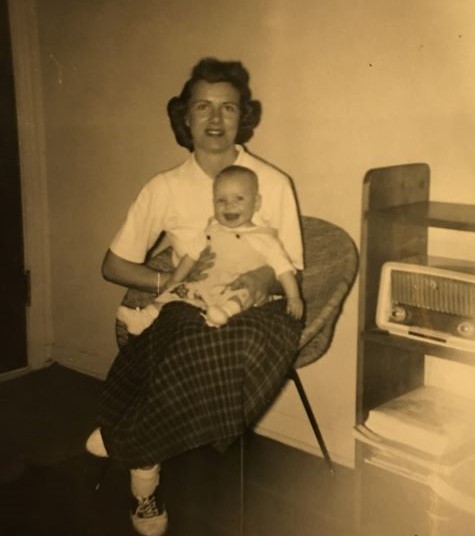
…when you realize that you yourself are “mid-century”, it puts a different light on everything. Here I am in 1958, or possibly early 1959, with my mom, who is wearing a classic 1950s outfit (love the shoes), seated on a 1950s basket chair, (which I wish I still had), beside a 1950s radio they got in Germany before I was born. Having been born in the 1950s, a child in the 1960s, and a teen in the 1970s, I think I am qualified to write a “mid-century” post. Technically only the very beginning of the ’70s counts as mid-century, according to what I found online. But since as a 1970s teen, you really still have everything in your house that you had as a 1960s child, and your parents were born in the 1930s and got married in the 1950s, it all adds up to having a pretty comprehensive mid-century life.
Clothing
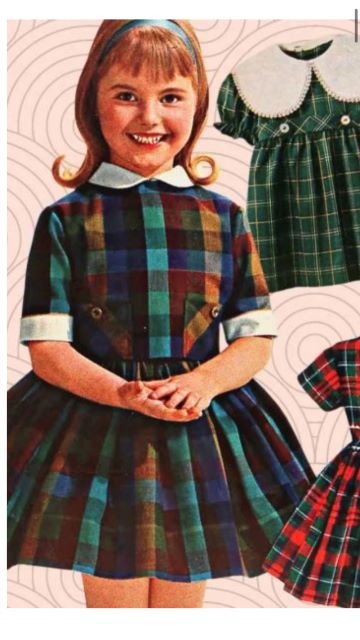
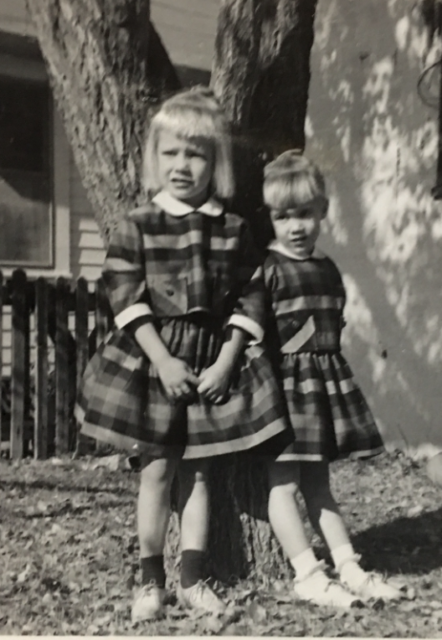
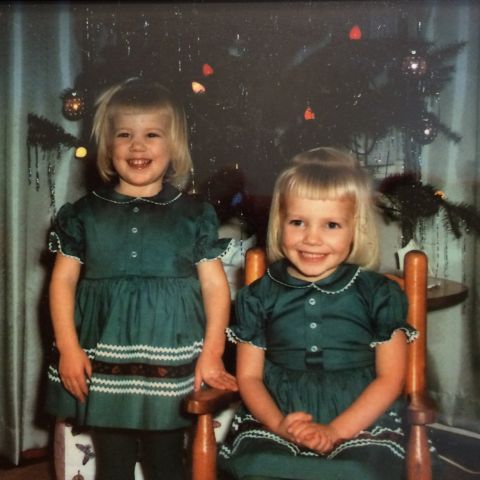
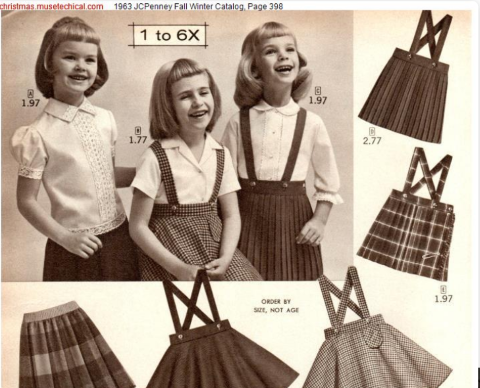
I had always thought our mom had made us these outfits, because she did make a lot of our clothes when we were that age. But then I discovered that it came from the Montgomery Ward’s catalog. Or was it Sears? Our hometown was so small that we had to order a lot of things from “the catalog” unless we wanted to go another city to shop. Kind of like now, only now we order stuff online, not because we have to, but because we can.
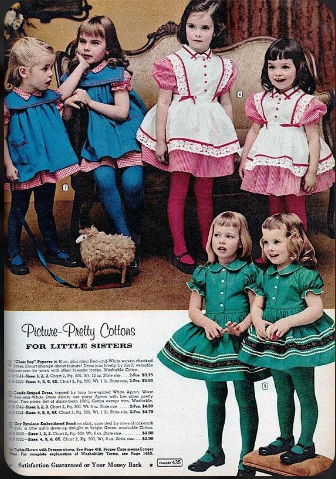
These little dresses came from the catalog too, even though I know our mom could have made them if she’d wanted to.
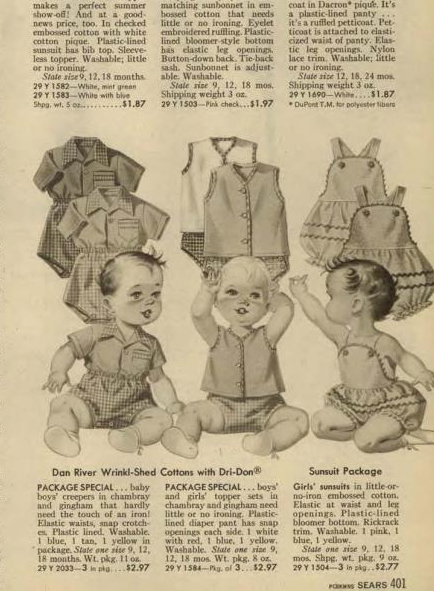
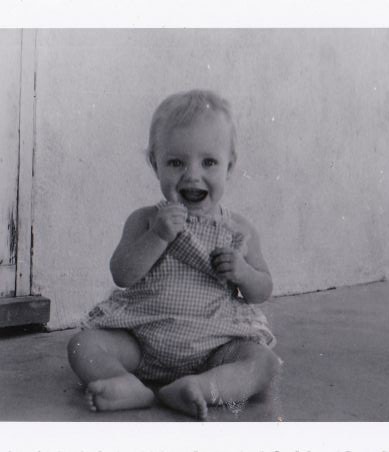
It seemed like in the summer we practically lived in sunsuits.
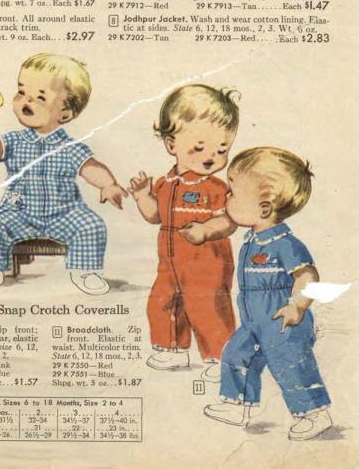
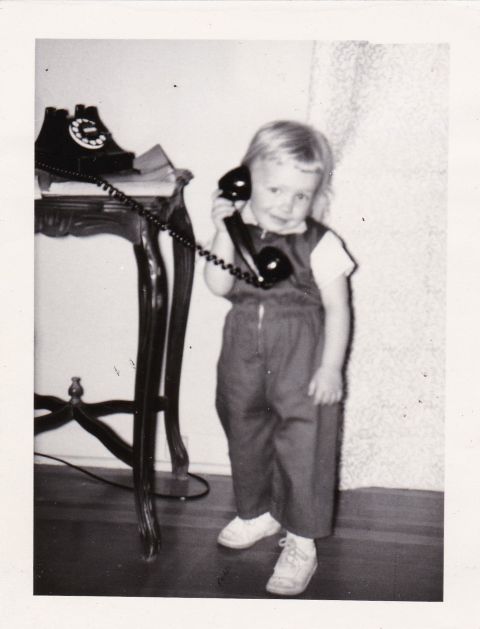
If you want to see a treasure trove of vintage catalogs, click on this link! They start in 1930 and go up to 2017, and there is a photo of every single page in each of them. Also, in searching for 1960s kids’ clothes online, I found a WordPress blogger named Janet, who has a really fun blog called “Mid-Century Page”. On it she has all kinds of cool photos and information about a variety of mid-century topics. She collects mid-century women’s magazines and has links to them, organized by year, month, or title. Click on the link to check it out.

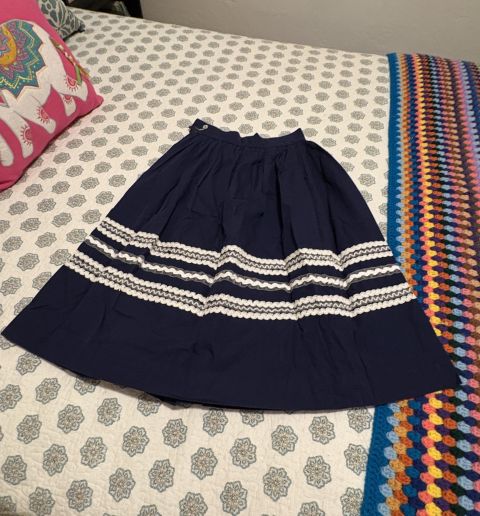
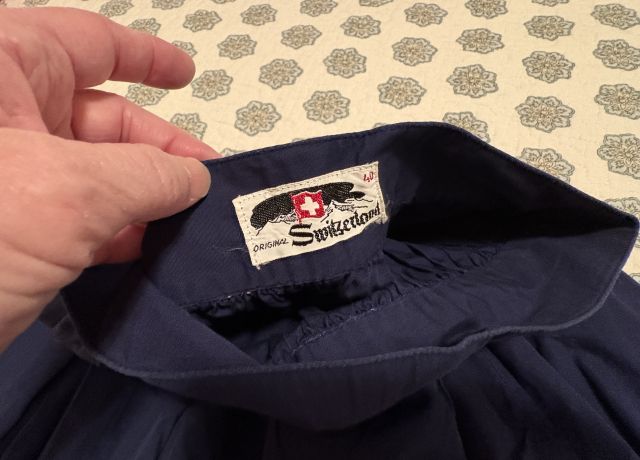
Speaking of mid-century fashions, here are my parents in Italy sometime between 1956 and 1958. It shouldn’t surprise you to know that I still have the skirt. What should surprise you is that I don’t have the receipt!
From Germany
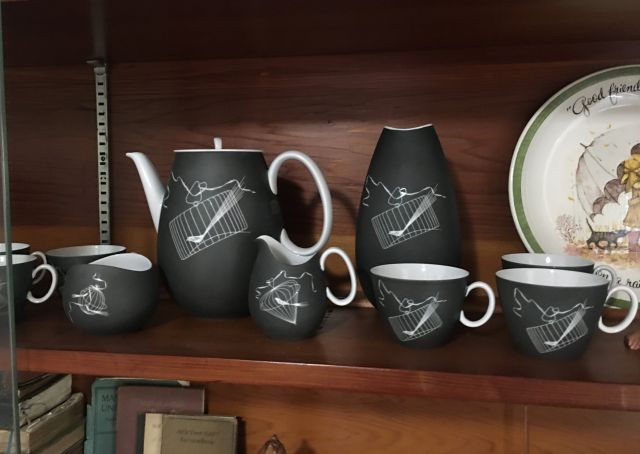
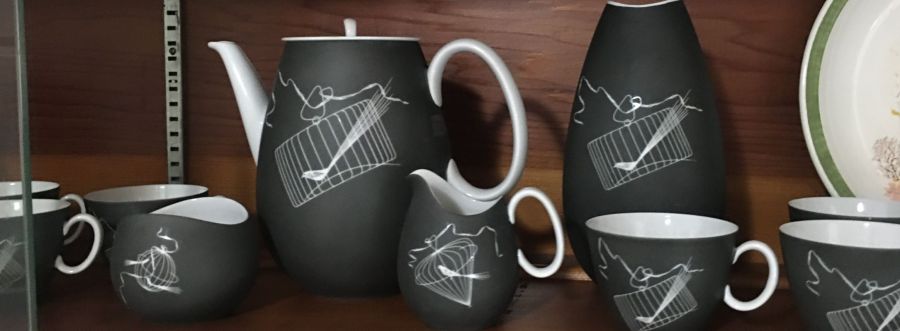
Because our dad was stationed in Bamburg from about 1956 to 1958, we had a lot of things in our house that were from Germany. I’ve always felt that being in Europe, and Germany in particular, made up one of the happiest times in their lives. One of my favorite things from Germany has always been this “Papageno” coffee set.
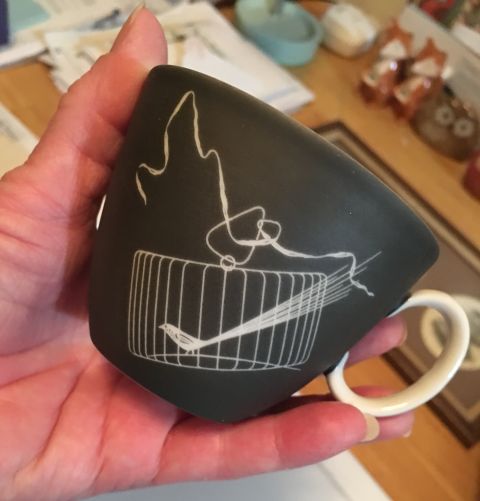
It’s been around for as long as I can remember, and I don’t remember ever not thinking the ribbon on top of the birdcage was the profile of a barking dog. To my knowledge, it was never actually used for having coffee. It was enough just to have it.
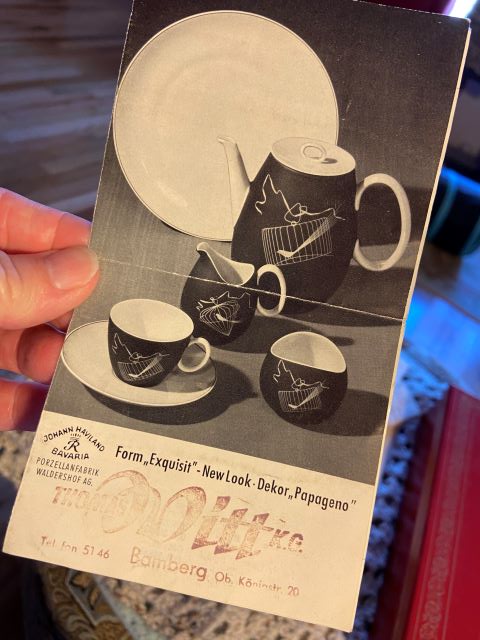
And yes, I do have the brochure and the receipt! The pattern is known as “Papageno”, which unbeknownst to me, was inspired by a character from the Mozart opera “The Magic Flute”. However, in my online search for “Papageno China”, among the results I found a company called Papageno in China that bills itself as “a leading manufacturer and exporter of PVC hoses”. Just so you know.
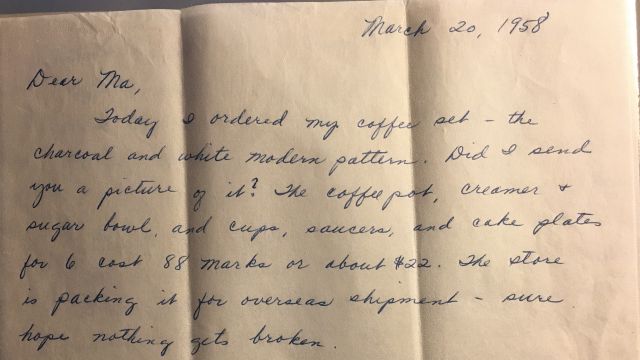
I even have the letter from my mom to her mom, telling her she had ordered the coffee set. Notice that the service for six was 88 marks, or about $22. If you’re wondering how I came to have this letter, it’s like this: my mom kept every letter anyone wrote her, and so did my grandma. Then when my grandma passed away, my mom inherited the letters. When my mom passed away, I inherited them. They’re practically historical documents now, so how am I going to throw them away? In some cases, I can actually go back and put the letters together, matching a letter from one with the answer from the other.
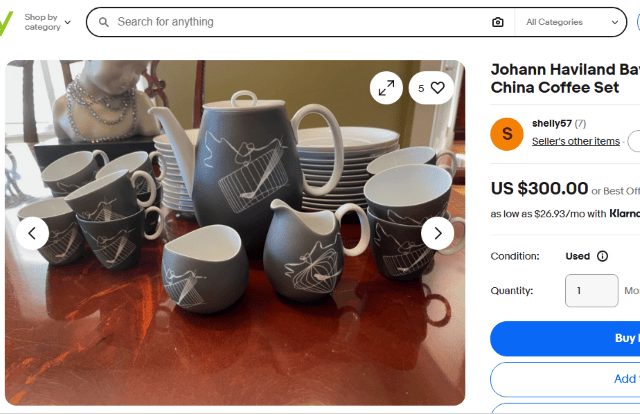
This was on eBay for $300 recently, but it looks like a larger set than what I have. I even found a site where replacement cups can be purchased online for $16.99.
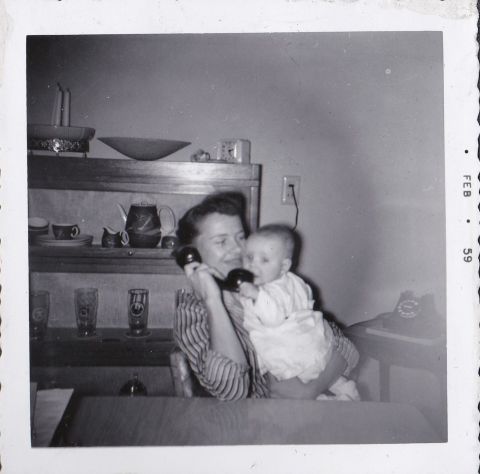
In the background of this photo, you can see the Papageno coffee set, inside the “Schrank”, which is what we always called the barrister’s bookcase. Our mom said that technically a Schrank is more of a cabinet or cupboard, but that’s what it was always called at our house. Incidentally, the “Schrank” is in my sewing room right now.
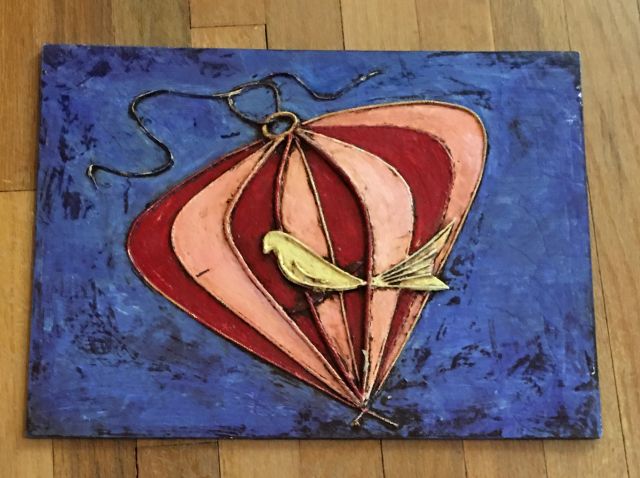
And, while this may fit in better under “Art”, I have this piece my dad made when he took an art class in what I’m guessing was the early 60s, most definitely based on the Papageno pattern.
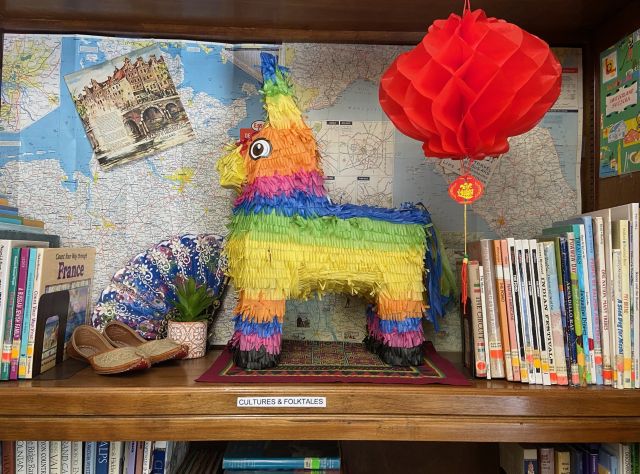
My parents saved every map and travel brochure they got during their time in Germany. Of course, I couldn’t bring myself to get rid of most of them. I decided to use a couple of maps and some brochures as decorations for my “Cultures and Folktales” shelf at the Christian school library.
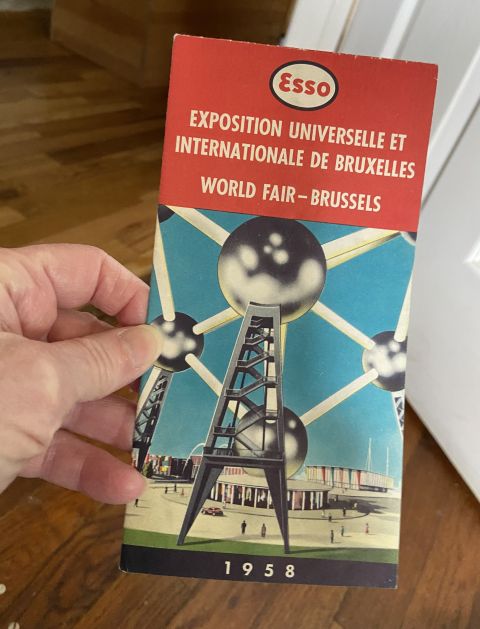
This brochure is from the 1958 World Fair in Brussels, which ran from April 17 to October 19, 1958.
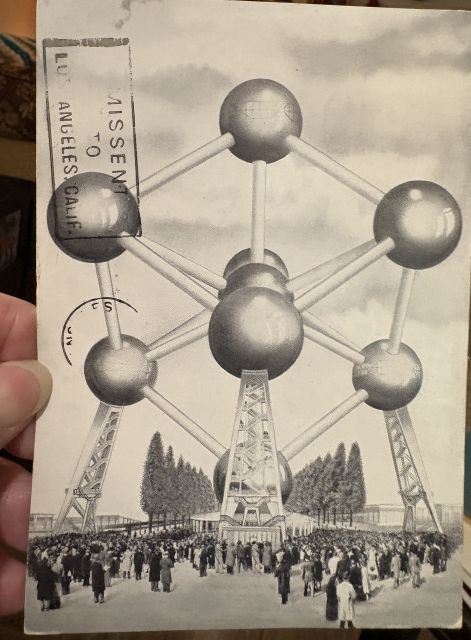
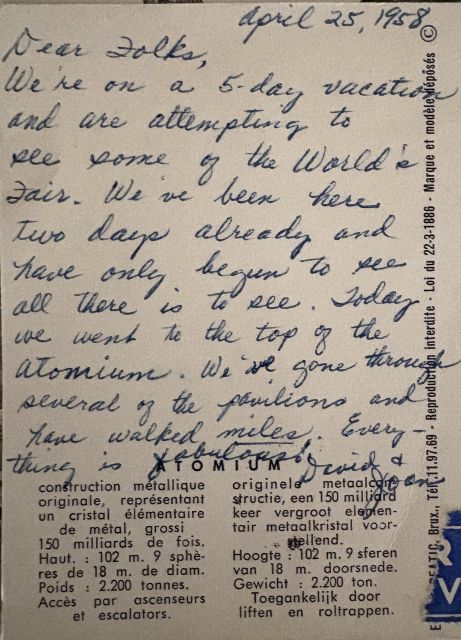
Not only did my parents save the brochure from their visit, but my grandparents saved the postcard my mom wrote them. And since I’ve become the unofficial family historian, both items eventually ended up with me.
Mid-Century Art
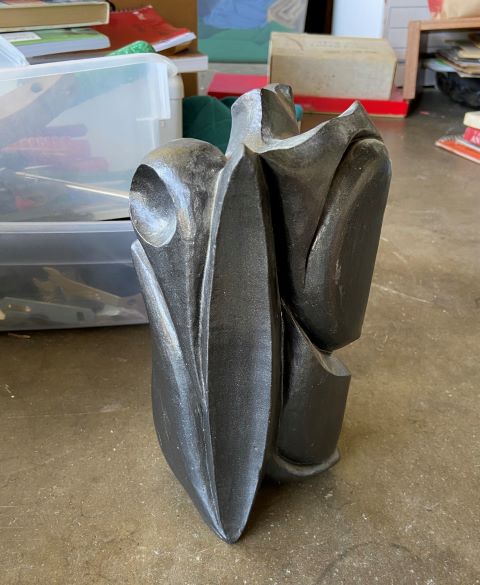
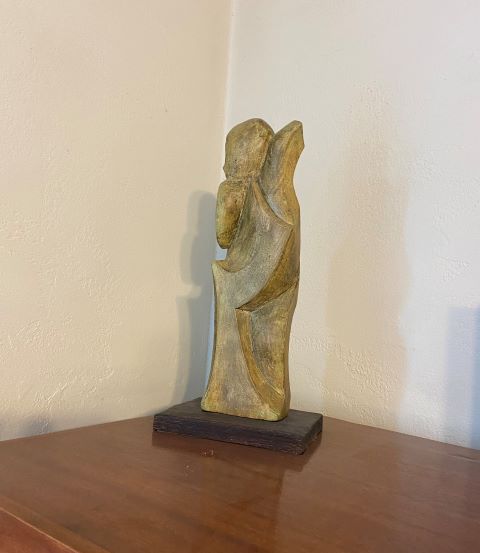
We had a lot of mid-century art that our dad had made in different college classes. I actually never asked how most of them were done, but I do know that none of our friends had decor like this around the house, at least not made by their dads.
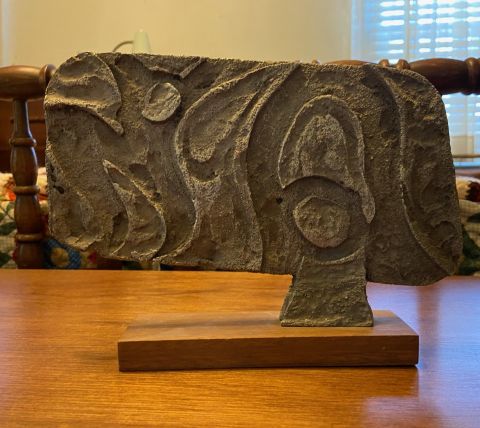
This metal sculpture, like the Papageno coffee set, has been around for as long as I can remember.
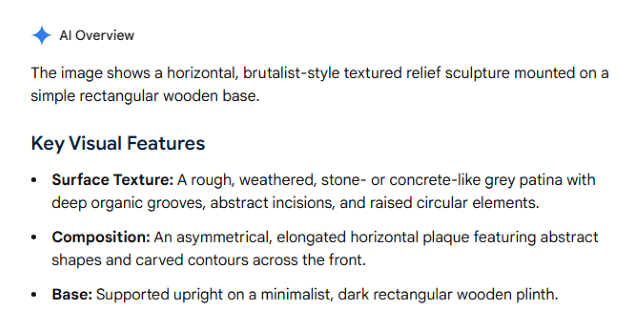
I did a Google image search on it and found the above information. Who knew there was a mid-century art genre called “brutalist”? The main idea behind brutalism was to use raw materials and rough surfaces. I read that brutalist sculpture was an offshoot of brutalist architecture, which is much easier to find online.
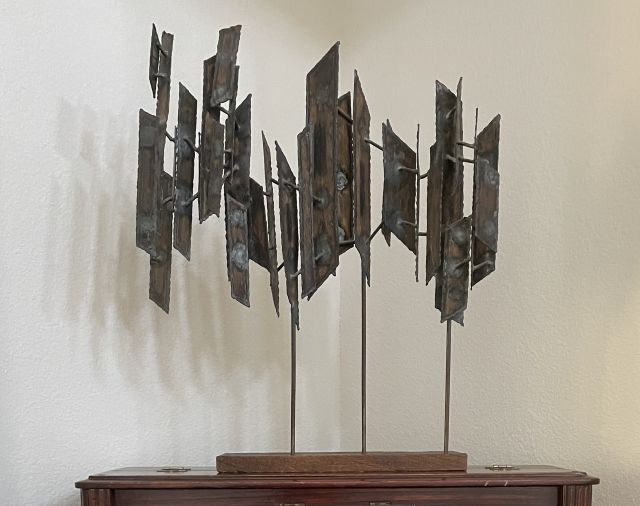
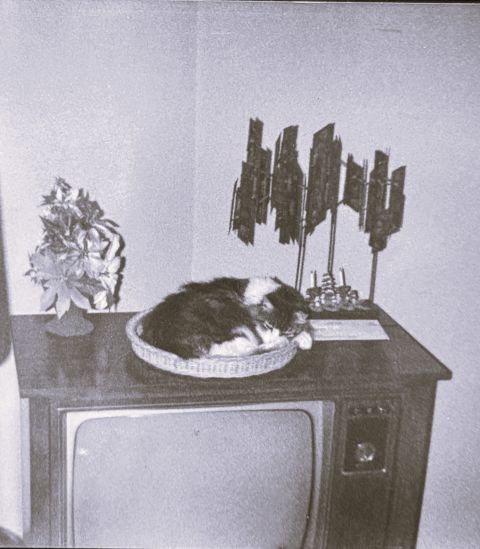
This one also searched up to be a mid-century brutalist design. Again, I don’t remember it ever not being there.
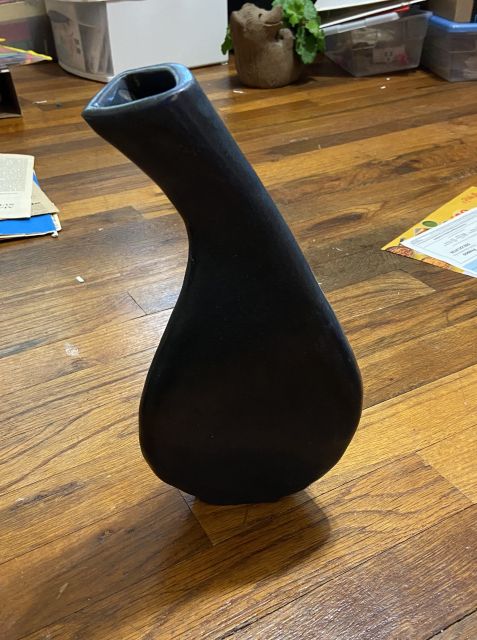
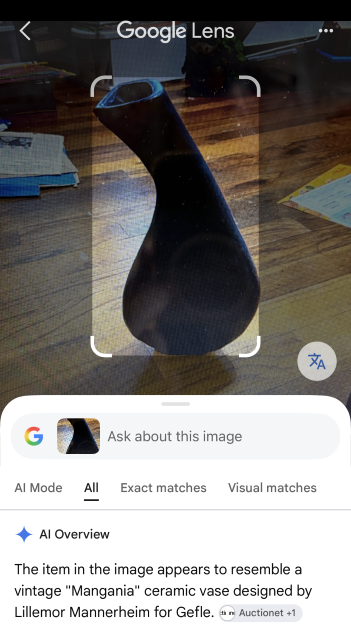
I’ve always thought this was a rather odd vase, but when I did an image search on it, I found that it’s reminiscent of a Swedish artist named Lillemor Mannerheim.
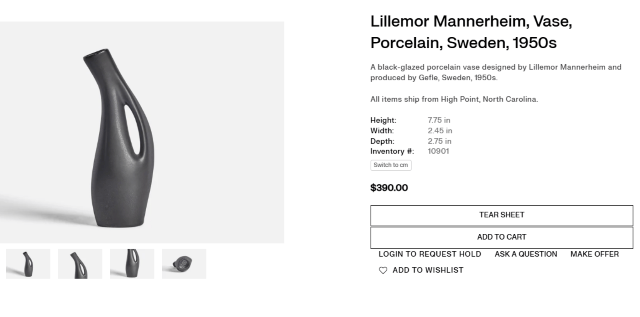
I found a website called Barnebys, where I learned that “Lillemor Mannerheim belonged to the generation of women who established themselves within the male-dominated world of design despite much resistance”.
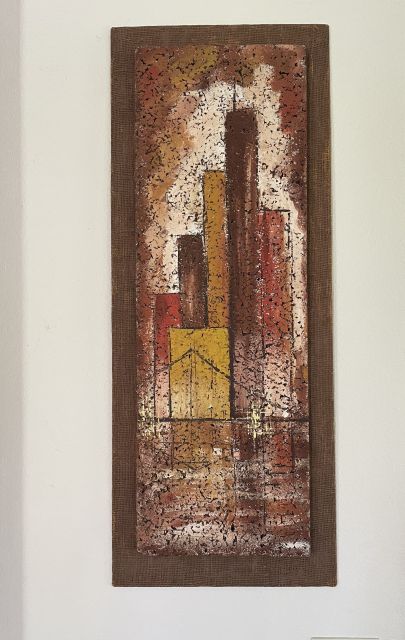
The more I think about it, the more I realize that we were exposed to a wide variety of mid-century art without ever setting foot inside a museum. It never occurred to me that the “museum” was our own house. This was done on cork, mounted on a burlap-wrapped board. I was surprised to find that even this has some “brutalist” characteristics.
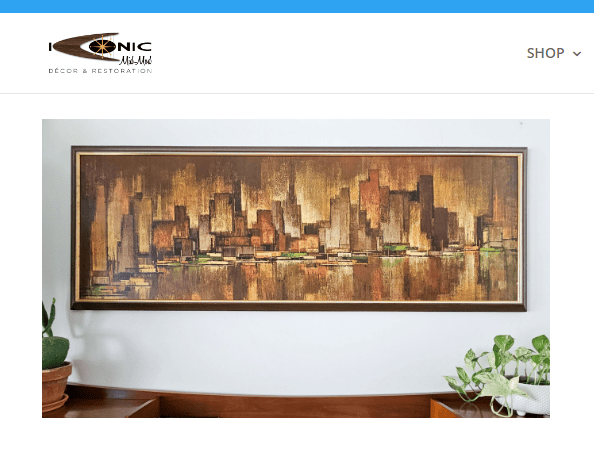
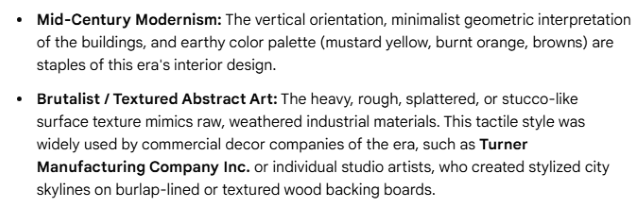
One visual search said Daddy’s cityscape resembled a Turner wall print like this one. But who was Turner? With a bit more searching, I learned that Turner, in this context, was not the name of an artist, but a mid-century company that mass produced wall decor in the 50s to the 70s. Apparently he had used the “tactile style” (featuring burlap-lined or textured background) and the “stylized city skyline” that were popular during that time
Home Furnishings
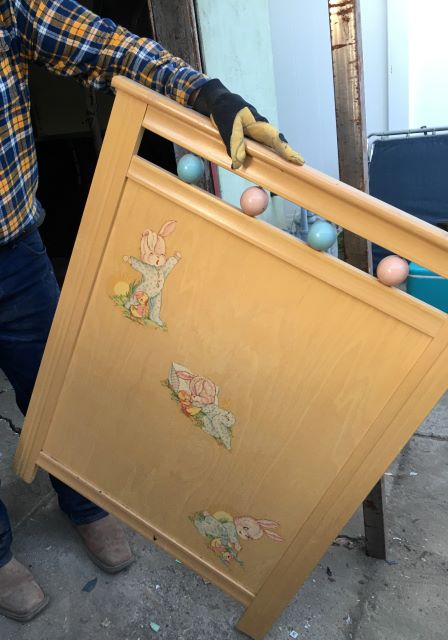
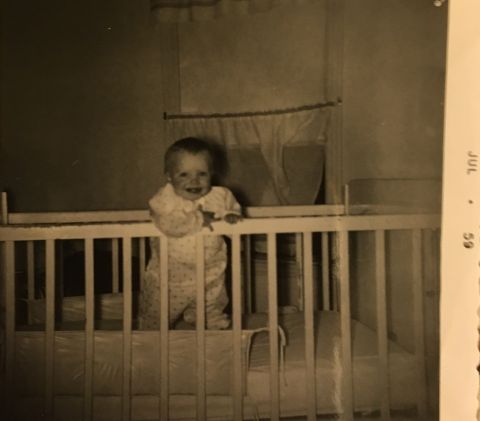
This is part of the baby crib my parents bought, presumably in 1958 when I was born. I will say, though, that the crib in the 1959 photo doesn’t really look like the same one.
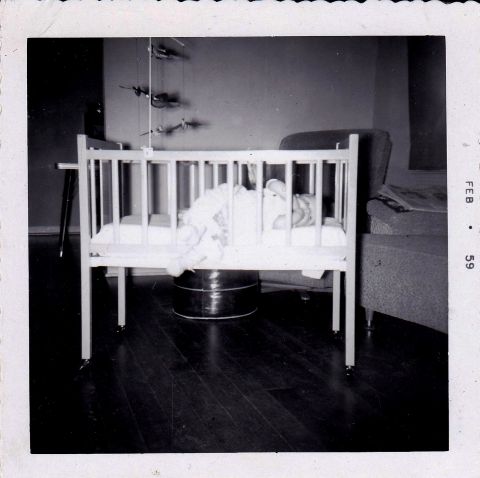
A quick AI search lets us know that the “cribs of this era do not meet modern infant safety standards”. If I remember right, the crib you see me in here, sticking my feet out between the rails, was called a “port-a-crib”. It folded up so you could take it on trips or just have an extra crib in the living room.
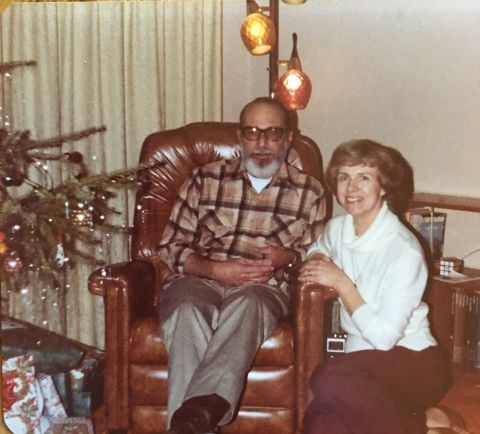
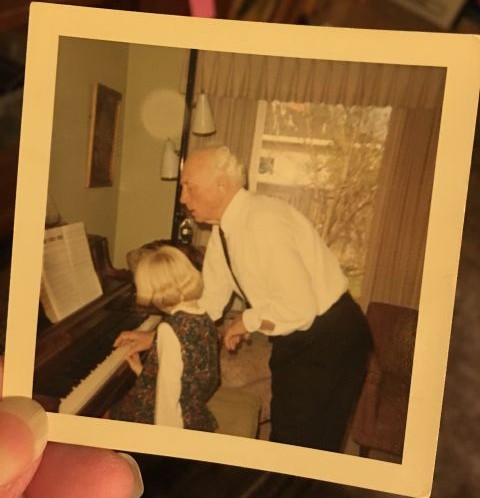
Here you see my parents in what I’m guessing was sometime in the 1970s. Notice the extension pole lamp behind them. You can see another typical mid-century pole lamp in the picture of me with Grandpa Johnson. That was at their house, but we also had a similar one at one time.
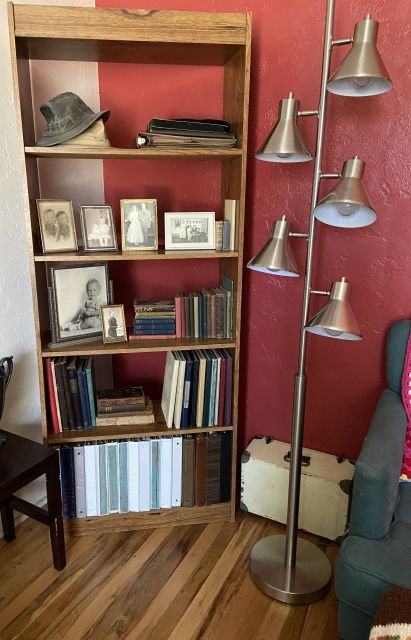
I surprised myself when I went “lamp shopping” earlier this year and came home with this one out of all the other choices on the “showroom floor”. I wasn’t even looking for anything “mid-century” at the time, but once I saw it, I knew it was my style.
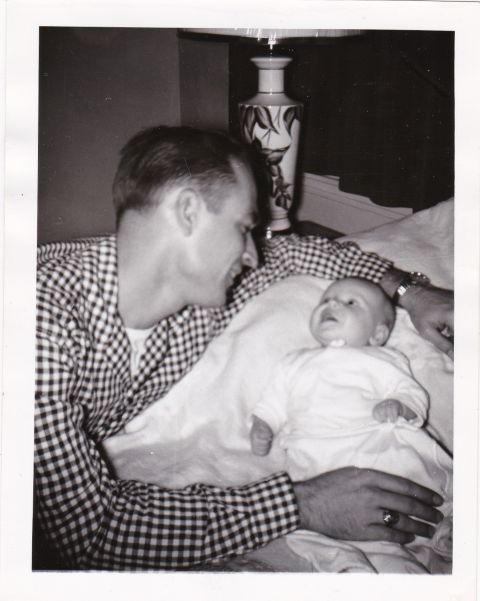
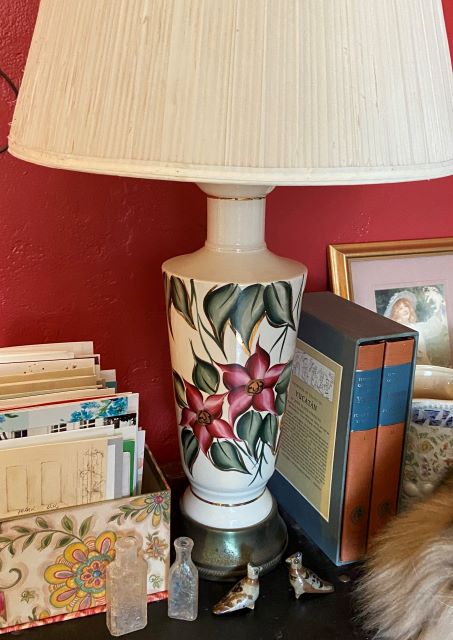
The lamp behind my dad and me has been around for at least 68 years. Now it’s at my house. That’s Foster, just visible in the bottom right corner.
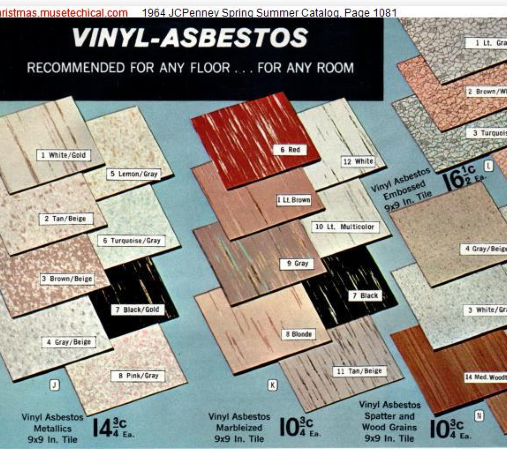
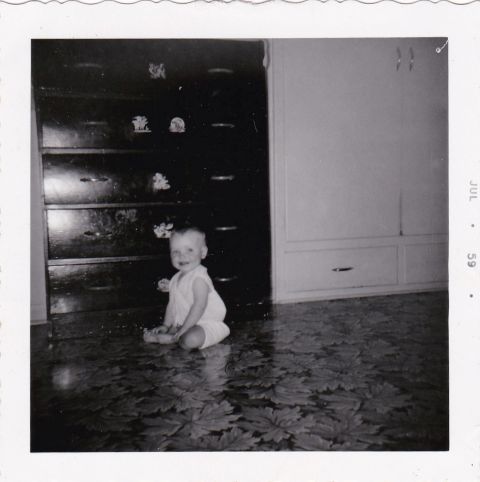
Check out the linoleum! Did ours have asbestos?
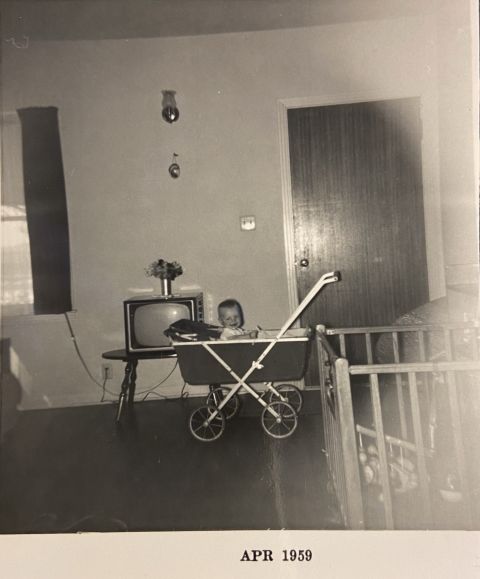
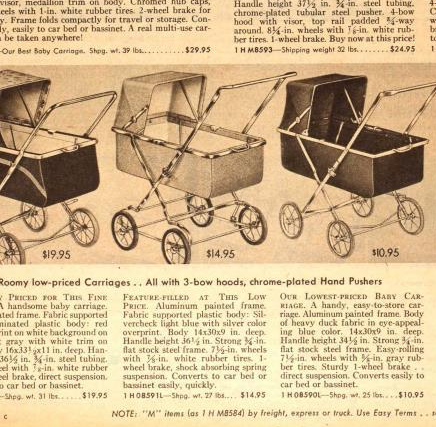
It seems like my baby buggy must have been ordered straight from the catalog!
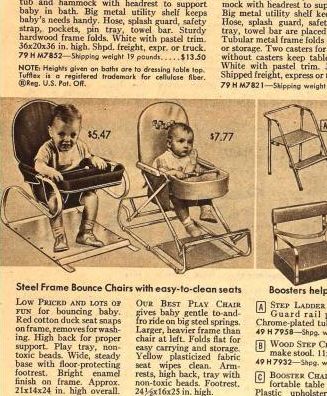
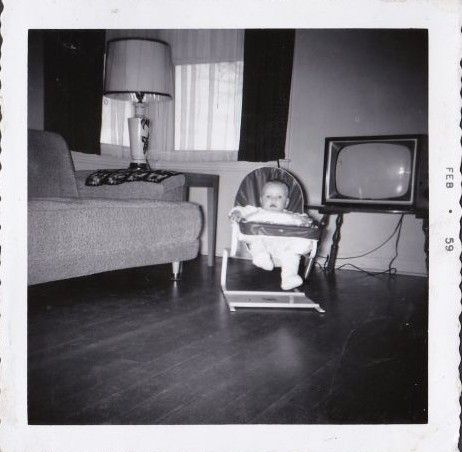
Nothing like steel frame bounce chairs with easy-to-clean seats!
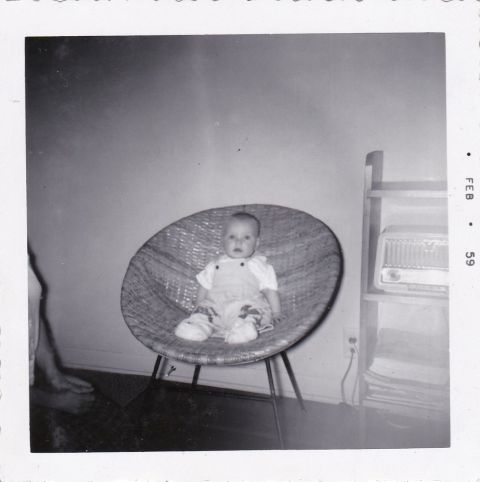
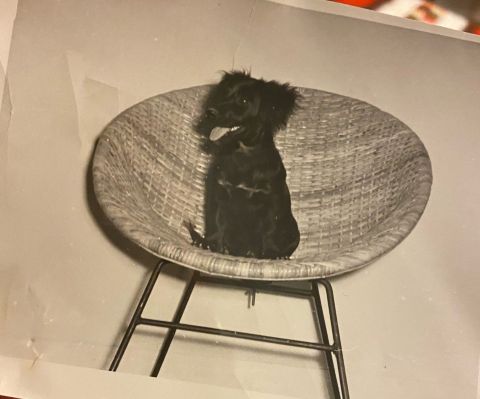
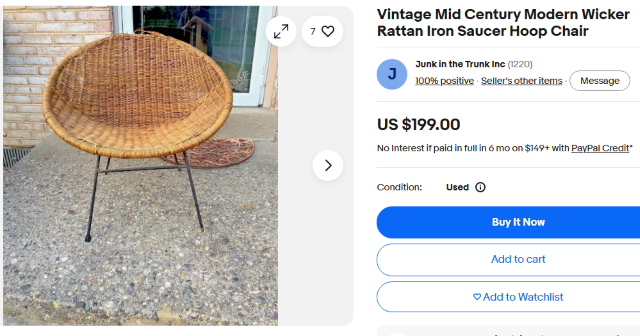
“Pray take the basket-chair.” (Sherlock Holmes to Mr. James Ryder in “The Adventure of the Blue Carbuncle” and to Lord St. Simon in The Adventure of the Noble Bachelor”.)
Now you know I really am “mid-century”, and if your name is Debra (any spelling) it’s more than likely that you are, too!


Oh my! All those things seem very familiar to me. Oh, that radio… a chair… lamps etc. And clothes back then. I think it’s all retro now – and in a good way! 😊
Yep! Who would have ever thought we would be “retro”? 😂
It’s amazing how many things you still have from your parents! And what a treasure with the letters your mum and grandmother saved! I have a suitcase with letters written to me in the attic, but it would have been such a treat to also have my own letters. It’s fun to see how your mum got two sets of the same clothes for youbto wear simultaneously – my mum must have done the same, becausw I also have photos with me and my siblings wearing the same outfits. I always thought my mum sewed them herself as well, but now I am not so sure…
Great post!
Thanks Thérèse! I guess I just come from a long line of people who saved literally everything. In actually amazed at how many things we did have “forever”. And how the flowered lamp never got broken with three kids plus a variety of pets growing up around it, I’ll never know! 😂
It is incredible – some things just seem destined to “survive” everything 🙂 I am certainly one of those people who like having family heirlooms in my home, they contribute to a feeling of connectedness, and just knowing that they were important in one way or another for my ancestors, makes it an honor to try to bring them forward to the next generation (absolutely not sure if that will work, though 😄).
I agree!
I love mid-century modern. I would like to have a mid-century styled house with the furnishings as well. Perhaps without the shag rug, unless it’s orange.
That’s funny, because one of the things I was going to include was the orange carpet we once had in our living room! It wasn’t what you’d call shag, but it was orange. 😂
What a wonderful post! I too am a mid-century modern, but don’t have all the artifacts or historical documents like you do, to support my claim! What a rich heritage you have. 😉 )
Thanks! I think my parents were the exception because they kept everything!
I feel old–I am old! Lots of memories. I forgot about having a pole lamp. Never in a home photo.
I had so many other things I wanted to include, but it would have made the post too long. I might have to do a “Part 2”.
Java Bean: “Ayyy, our Dada recently saw a post asking for ‘classic movie recommendations’ and when he went to it they wanted movies from 1990 or earlier, which made our Dada go like Matt Damon at the end of Saving Private Ryan.”
That’s funny! 1990 indeed! 😂
I love that you have so many items and especially the letters!!! You are the family historian!
Yep I guess I am, at that! 😀
Love the mid century style!
Me too! 😀