“Grandpa’s Book”, Part 3
It’s one thing to say, “My grandfather served in World War 1,” but it’s something else entirely to really think about it. To sit down and contemplate what that actually means, and what it meant for him at the time. Although I’ve read over my grandfather’s memoirs (see “The Forgotten Bandsmen”) multiple times, it’s only recently “come home” to me that he, his brother, and his friends were really there, just as you and I really are where we are right this minute. It’s not just a story from a history book; it was their reality. Lately I’ve been studying the war and comparing what I’ve learned with the places and events in Grandpa’s book. In honor of Veteran’s Day, we’ll take a look at some of the experiences he wrote about. Besides the photos I have from his book and from Ancestry, I’ve included some images I found online to provide context to the places and experiences Emil wrote about.
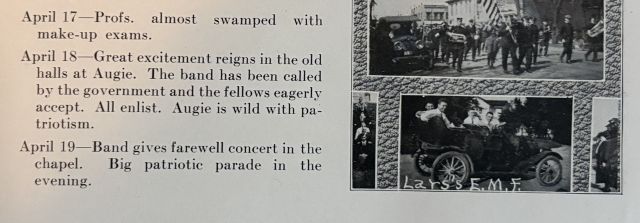
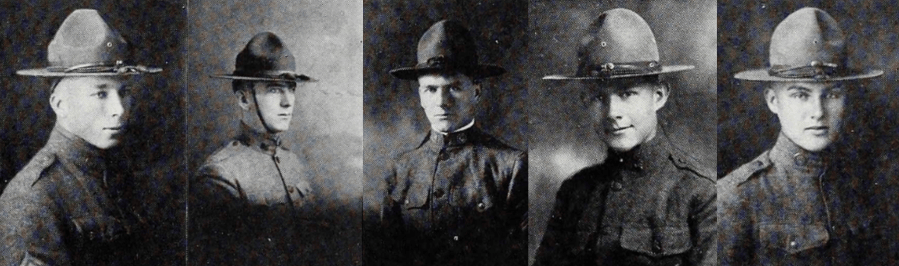
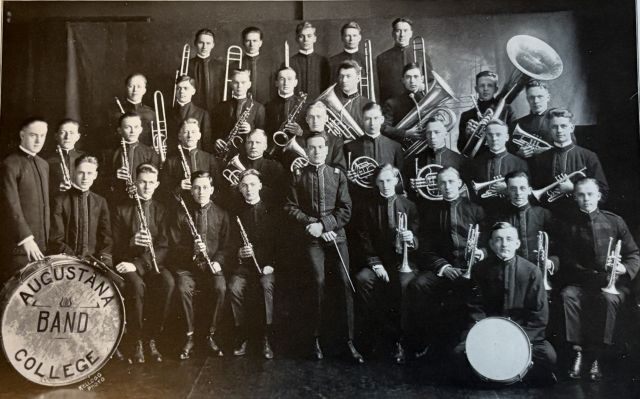
The majority of the Augustana College band joined the Army together in April 1917. In the “calendar” section of the 1917 Augustana yearbook, you can see that April 18 and 19 were days of “great excitement” for all. The band members weren’t drafted; according to Emil they were “invited” to join the 6th Illinois Militia. They enlisted before the actual draft had begun. That’s why, if you search on Ancestry.com for their World War 1 draft registration cards, you aren’t likely to find them. The first draft registration day for this war was June 5, 1917, and by then Emil and his friends were already in training at Camp Lowden in Springfield, Illinois. They did, however, have to register again during World War 2, when most of them were in their 40s.

Once they enlisted, the band became part of the 6th Illinois Infantry, which at that time was a National Guard unit. According to Wikipedia, the 6th Illinois Infantry was “mustered into Federal service 25 April 1917 at home stations [and] drafted into Federal service 5 August 1917.” They were then “converted, reorganized and redesignated 19 September 1917 as the 123rd Field Artillery and assigned to the 33rd Division.”
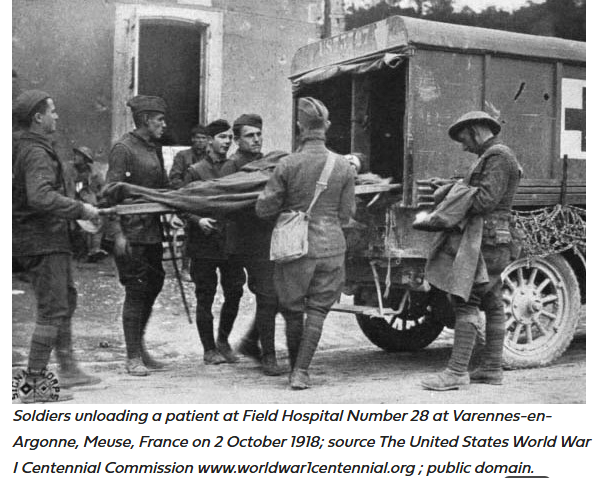
From Emil’s memoirs: “I learned that members of an infantry band were stretcher bearers in action. Twenty-one members enlisted in Rock Island. We fully intended to be stretcher bearers and give first aid to the wounded. We went in for the duration to save lives, and not to kill.”

Emil’s description of this photo tells us that the band received first aid training every morning during their initial training at Camp Lowden, located at the fairgrounds in Springfield, Illinois. “We were taught how to make tourniquets to prevent the loss of too much blood. We also learned how to make splints with most any kind of material.”
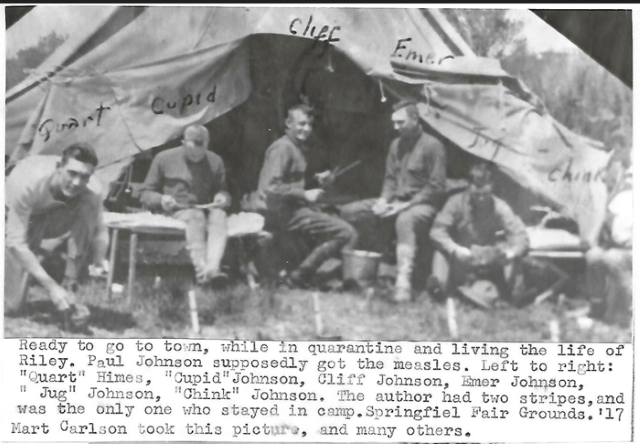
In one of their training camp adventures (see “Cast of Characters”), Emil, who was a band corporal, and his squad were placed in quarantine after one of their men, Paul Johnson, came down with measles. I recently came across this photo, taken by Martin Carlson, along with the caption Emil had written for his book. Five Johnsons in one picture! And that’s not including Paul, who was sent home to recover. I guess the Smiths and the Johnsons really did “win the war”.
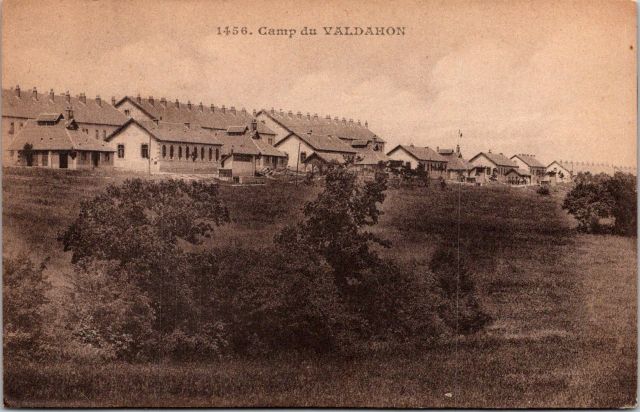
In July of 1918, the band was at Epinoy, not far from Besancon, in northern France. Later they would be sent to Camp Valdahon for “real” artillery training, since they had only trained with wooden replicas in the States. Emil wrote that on Bastille Day, 1918, the 123rd FA band played for “a big revue in Besancon, where all the allies were represented.” They were to give a concert later in the afternoon. At noon, however, NCOs of the band were guests of the “sous officiers” (NCOs) of the French 42nd Infantry at a “big feed” that included tables “full of wine bottles and glasses. Some of us were total abstainers, so we just sipped a little, but as soon as there was any room at all in the wine glasses, this was filled. I managed to keep a clear head, but some of the men became a little groggy.“
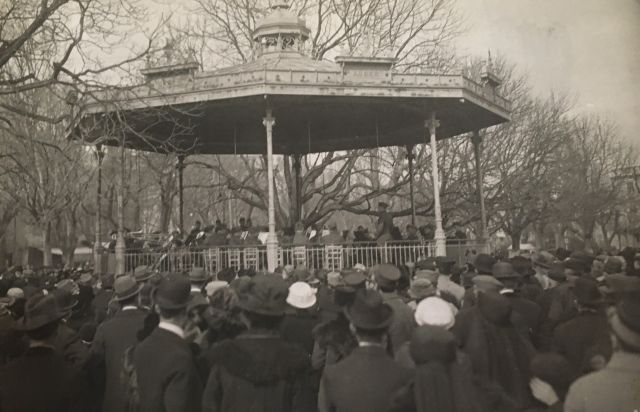
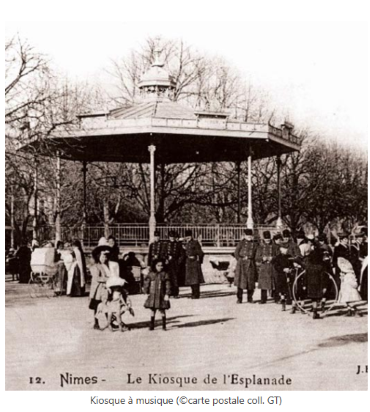
The men sang songs and played music together, and then it was time for the concert. “After this sumptuous repast, we marched back to the park, arm in arm with our hosts, having exchanged caps. The fresh air quickly cleared away the haze, and we gave a concert that proved to be highly acceptable.” Emil had labeled back of this post card “Besancon”, but it was also labeled as “Nimes” in a different handwriting. I was able to ascertain that it was, in fact, Nimes, and that the kiosk has since been torn down. Still, the park where the band played in Besancon was doubtless similar.
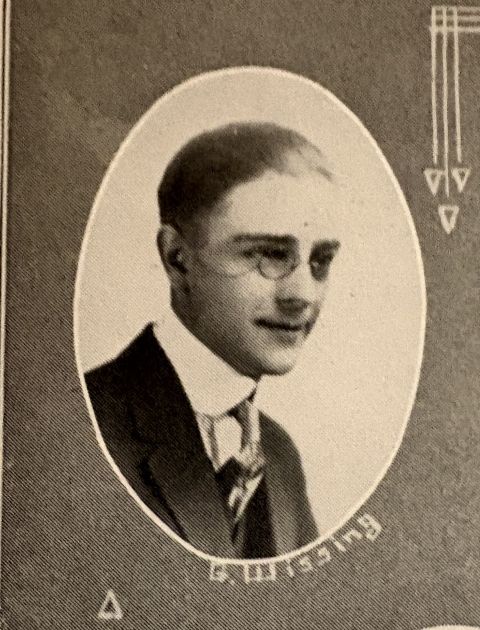
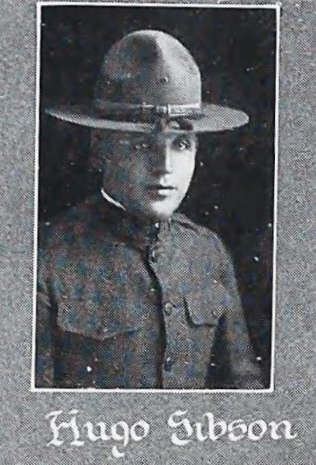
George Wissing and Hugo Gibson, who lost a set of drumsticks and a piccolo, respectively.
“After that we were at liberty till time for us to board the quad trucks for our return to Epinoy. Hugo Gibson had lost his piccolo, never to be found again. George Wissing had come along as a snare drummer. The band leader had borrowed the town crier’s drumsticks for Wissing to use. These two were lost.”
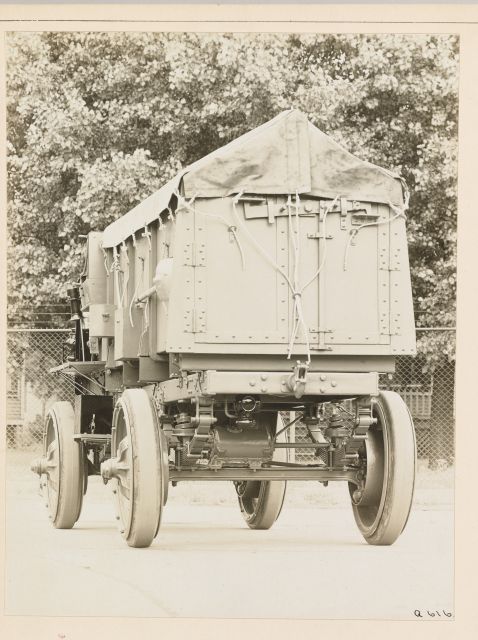
Image of a 1918 Nash Quad truck from this website. Photo labeled as public domain.
One might wonder if all of the “haze” had truly lifted by the time the musicians had boarded the quad truck for camp. “As we traveled back to our quarters, Henry Turpin sat on the floor of the truck, and at regular intervals he would say, ‘Wissing lost the town crier’s drumsticks.’ This really was no laughing matter, but after each reminder, Turpin would burst out laughing. After he had run down, he went through it again, all the way home.”
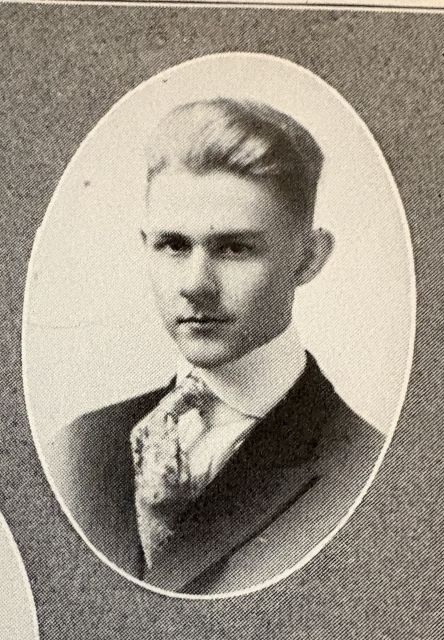
Martin Carlson had not been a part of the dinner, concert, and subsequent ride home in the quad truck. “He had broken the only reed he had for his clarinet so he could spend the afternoon with the Revillard family. After being their guest July 14, Mart came the next week.” The bandsmen had been “billeted” at different private homes during their stay in the area. Emil wrote that “Mart kept in touch with this family all through the years.”
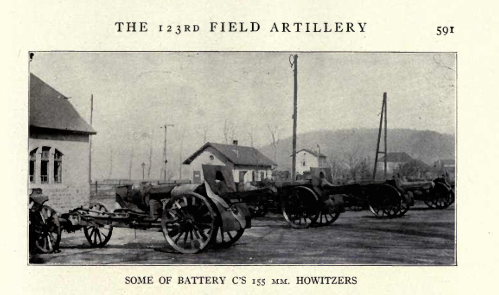
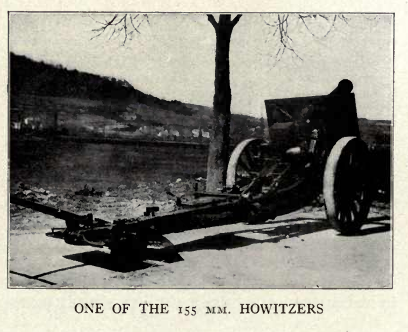
These photos are from the 1921 book “Illinois in the World War, An Illustrated History of the 33rd Division.” There is a whole section just on the 123rd Field Artillery, and the band is even mentioned once or twice. The chapter begins on page 571 in the book (page 191 of the online PDF). Here you can read the timeline and more information about the 123rd’s journey to take part in the battle of St. Mihiel.
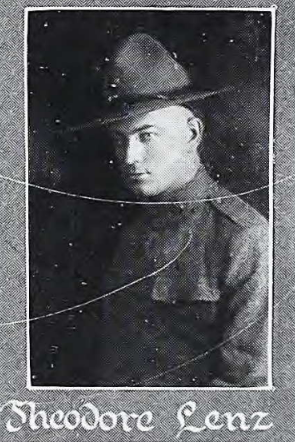
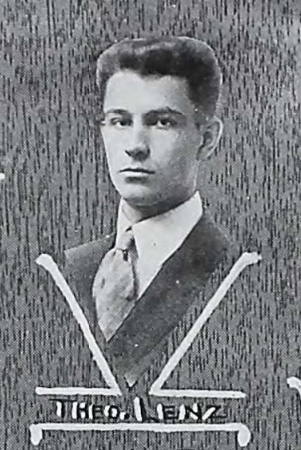
Theo Lenz was the one who dressed up as ” Le Pere Noel” on Christmas 1918, which you can read about in “(Not) Home for Christmas, Part 2”. But in September 1918, a day or two after the St. Mihiel drive, he went with Emil on what the latter called an “exploration tour” to the top of Montsec. Emil wrote, “We managed to get away from the outfit without being stopped. We climbed the steep, shell torn slope, without too much trouble. The enemy had built tunnels and underground workshops of every description, including a tailor shop, and in their hurry to escape the American onslaught, had left everything behind them. We opened doors with a great deal of caution, never knowing what we would find. In one room was a nice, friendly police dog. This dog really took to Lenz.”
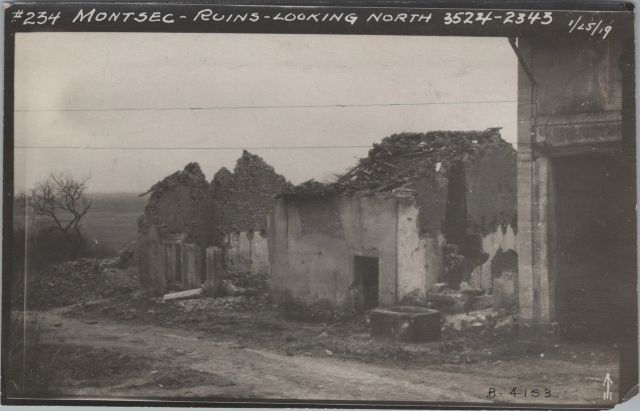
Emil described the view from Montsec: “Below us on the south, stretched the forest, where we had been hiding for several days in preparation for this drive. We could detect every speck of smoke that rose above the trees, and we wondered why the enemy had not completely destroyed us all. There were some devastated villages and desolate countrysides.” For Emil and Lenz, however, “The things that interested us most were the souvenirs.”
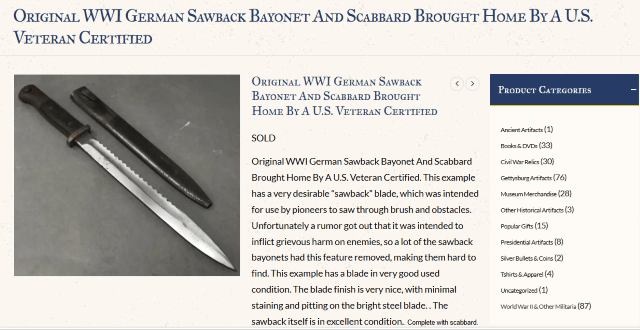
They saw “…rifles stacked up here and there, bugles, boots, gray field caps, uniforms trimmed with red, and many other things.” He revealed that they “took a lot of chances and even pulled the key on some hand grenades lying around in the area.” At dusk, the two men arrived back at camp, just as their column was getting ready to march. The Lieutenant promptly “passed sentence on Lenz”, assigning him to pick up firewood on the night marches to the Meuse-Argonne. He said nothing to Emil, who wrote, “I had expected to lose my stripes.” Among other things they picked up on their unauthorized visit to Montsec, Emil had found what he called a “saw-edge bayonet.” This was eventually stolen. “Even in war, I am a man of peace, but I barely avoided three or four fights trying to keep the saw-edge bayonet. I guarded it as best I could, but finally some thief, smarter than myself, stole it, and I was unable to find it again.”
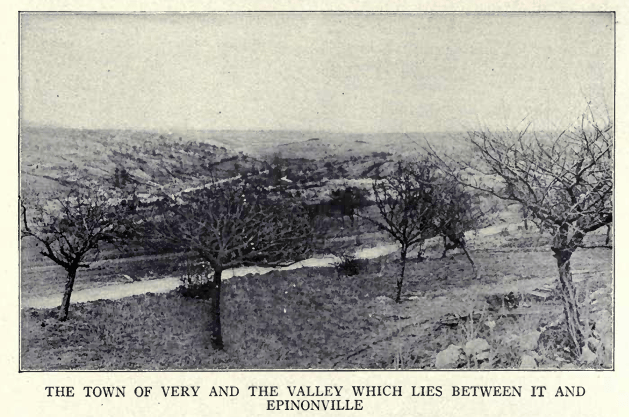
After St. Mihiel, the 123rd went on to the Argonne forest where they participated in the Meuse-Argonne offensive. It was near Very that Martin Carlson was wounded. Martin was also injured in a gas attack, which resulted in what Emil described as “a skin irritation the doctors were unable to cope with” that lasted the rest of his life.
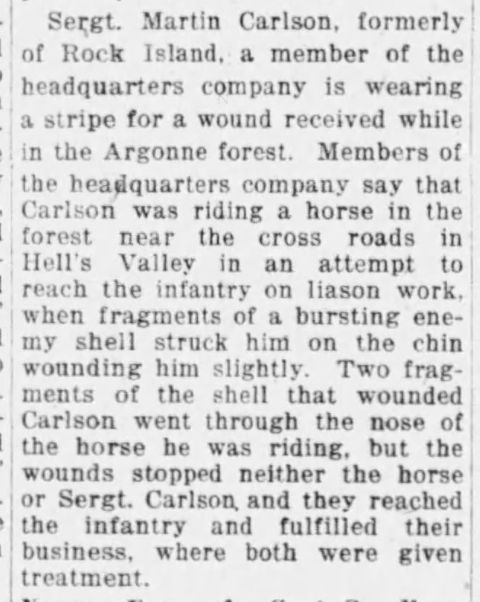

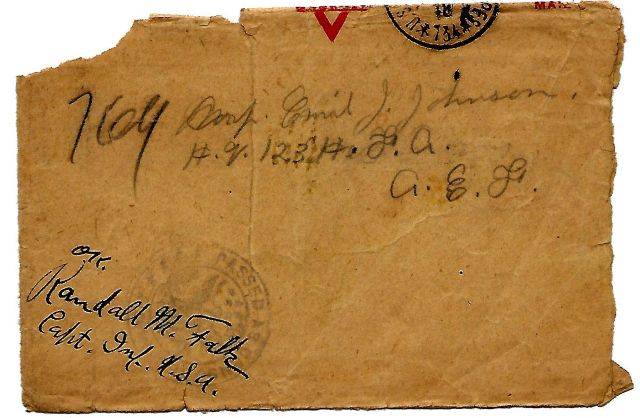

There is a lot more about the Meuse-Argonne in Emil’s memoirs, including his meeting up with his brother, John Alfred, from the 125th Infantry at the front, but that will have to be another post altogether.
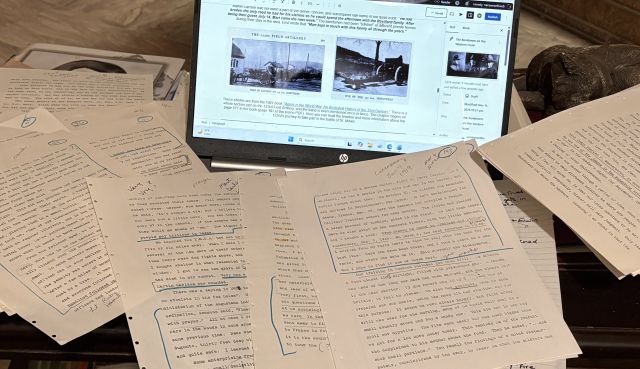
For now, I’ll leave you with the assurance that, even with the posts I’ve already written about it, we have barely scratched the surface of the information to be found in Grandpa’s book.

